
Silk Damask Wallcoverings: Looms, Patterns, Mills, and 2026 Specification Costs
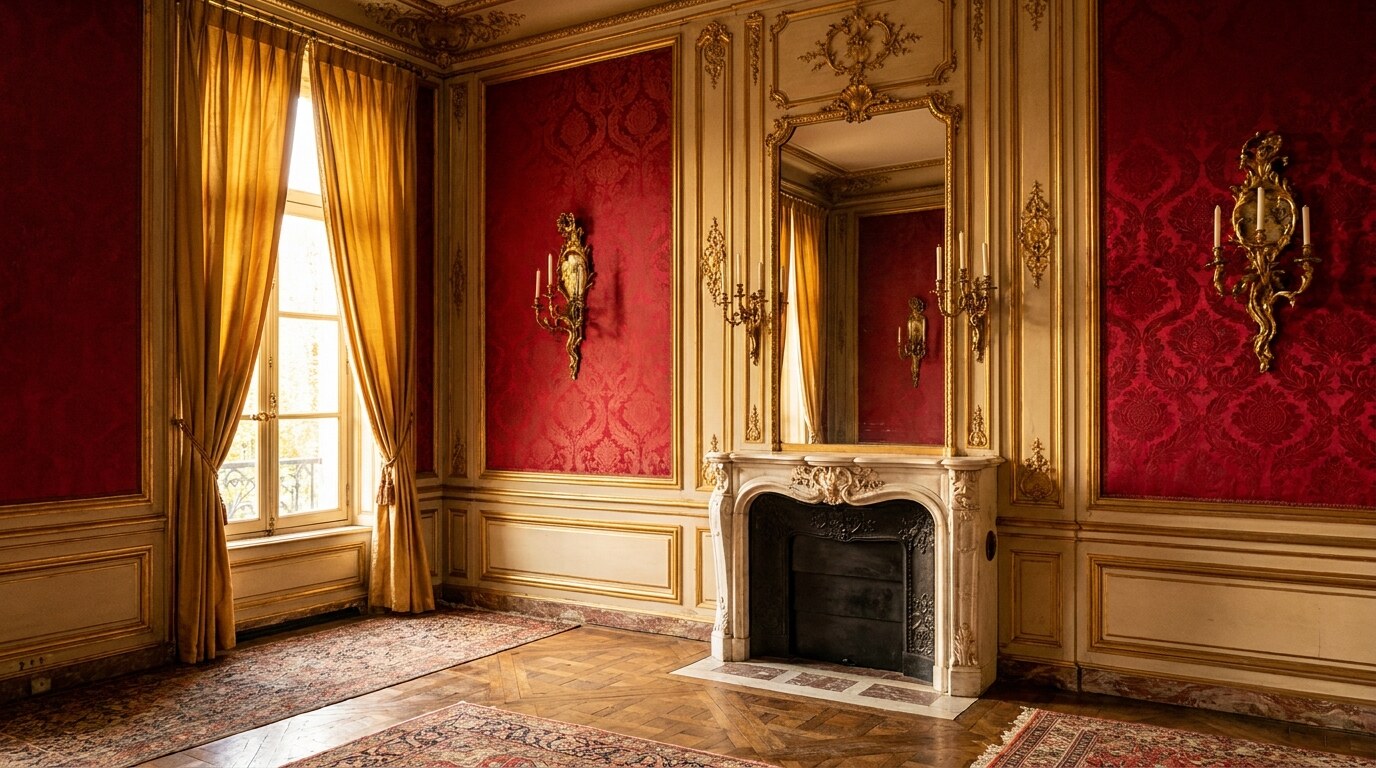
Silk damask wallcovering is a self-patterned woven silk produced on Jacquard looms, typically at 50 to 60 cm width, applied to interior walls as a tensioned panel system over hessian backing on timber battens. The principal European producers in 2026 are Tassinari & Chatel (Lyon, founded 1680), Prelle (Lyon, founded 1752), Rubelli (Venice, founded 1858), Lisio (Florence, founded 1906), and Antico Setificio Fiorentino (Florence, founded 1786), with prices ranging from €300 to €1,200 per metre run depending on weight and pattern complexity.
What "damask" means structurally
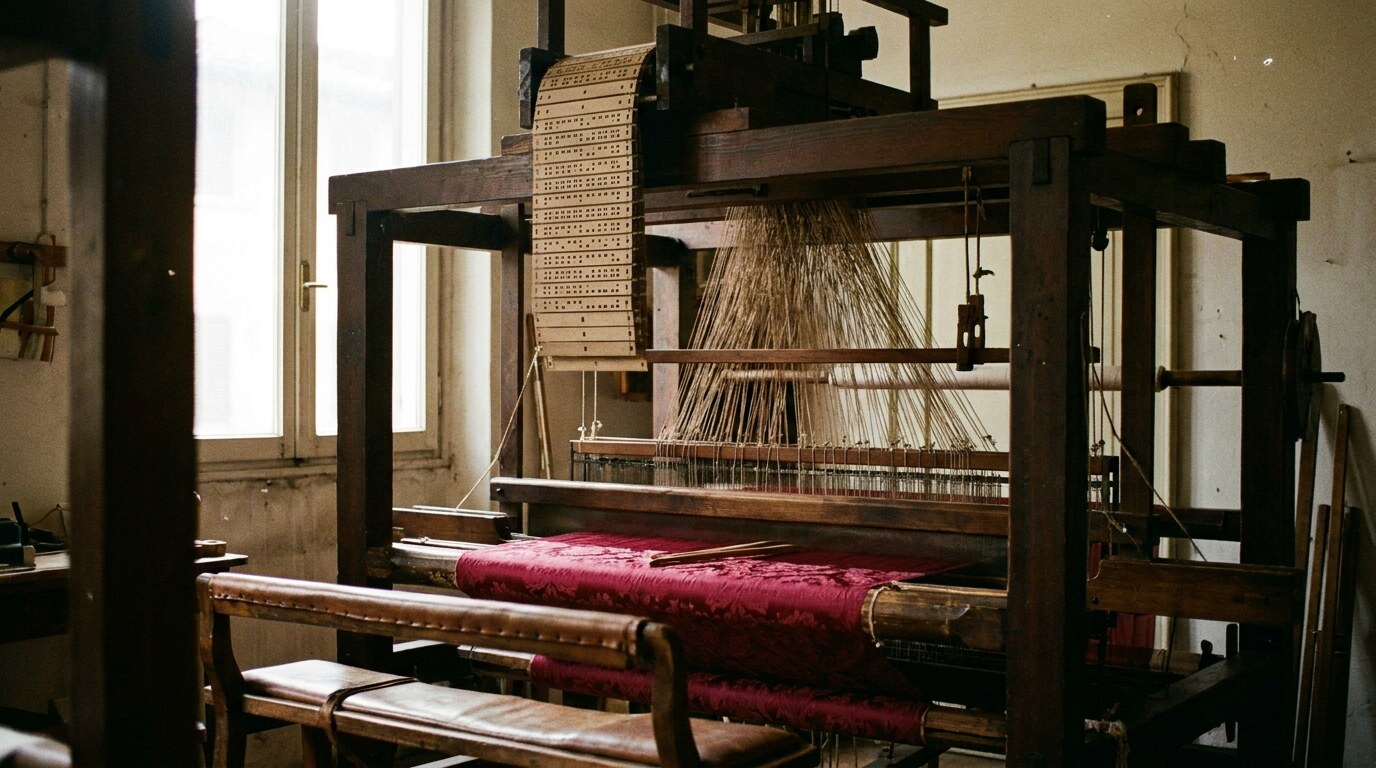
"Damask" describes a weave structure, not a fibre. Damask is a self-patterned weave produced by alternating warp-faced and weft-faced satin areas across a single fabric, so that a single colour appears in two distinct surface qualities (matte vs lustrous) on the front of the cloth. The pattern reverses on the back. The technique originated in the Byzantine and Damascene textile workshops of the 6th to 12th centuries; the term damask derives from Damascus and entered French and English textile vocabulary in the 14th century. Modern silk damask is woven on Jacquard looms (Jacquard-attached frame mechanism patented Joseph-Marie Jacquard, Lyon, 1804) carrying punched cards that control individual warp threads.
The Lyon and Italian mills
Five active heritage mills supply the global classical-interior market in 2026, each with documented continuous operation back to the 17th, 18th, or 19th century.
| Mill | Founded | Base | Archive size | Notable supply |
|---|---|---|---|---|
| Tassinari & Chatel | 1680 | Lyon | ~35,000 designs | Mobilier National (Versailles, Élysée) |
| Prelle | 1752 | Lyon | ~6,000 designs | Vatican Apostolic Palace, Buckingham Palace |
| Antico Setificio Fiorentino | 1786 | Florence | ~3,500 designs | Pitti Palace, Quirinal Palace |
| Rubelli | 1858 | Venice | ~7,000 designs | Palazzo Pitti, La Fenice |
| Lisio | 1906 | Florence | ~4,000 designs | Vatican, US National Cathedral |
Tassinari & Chatel, founded in Lyon in 1680, has produced silk weaves on heritage Jacquard looms continuously for 345 years and holds the official supply contract for several Mobilier National restoration sites including the Salons of the Élysée Palace. Antico Setificio Fiorentino, established 1786, operates 18th-century looms still in daily production at Via Lorenzo Bartolini 4, Florence, and is the only surviving European mill where pre-Jacquard hand-drawloom weaving is performed for commercial restoration.
Specification: panel widths, repeats, joining
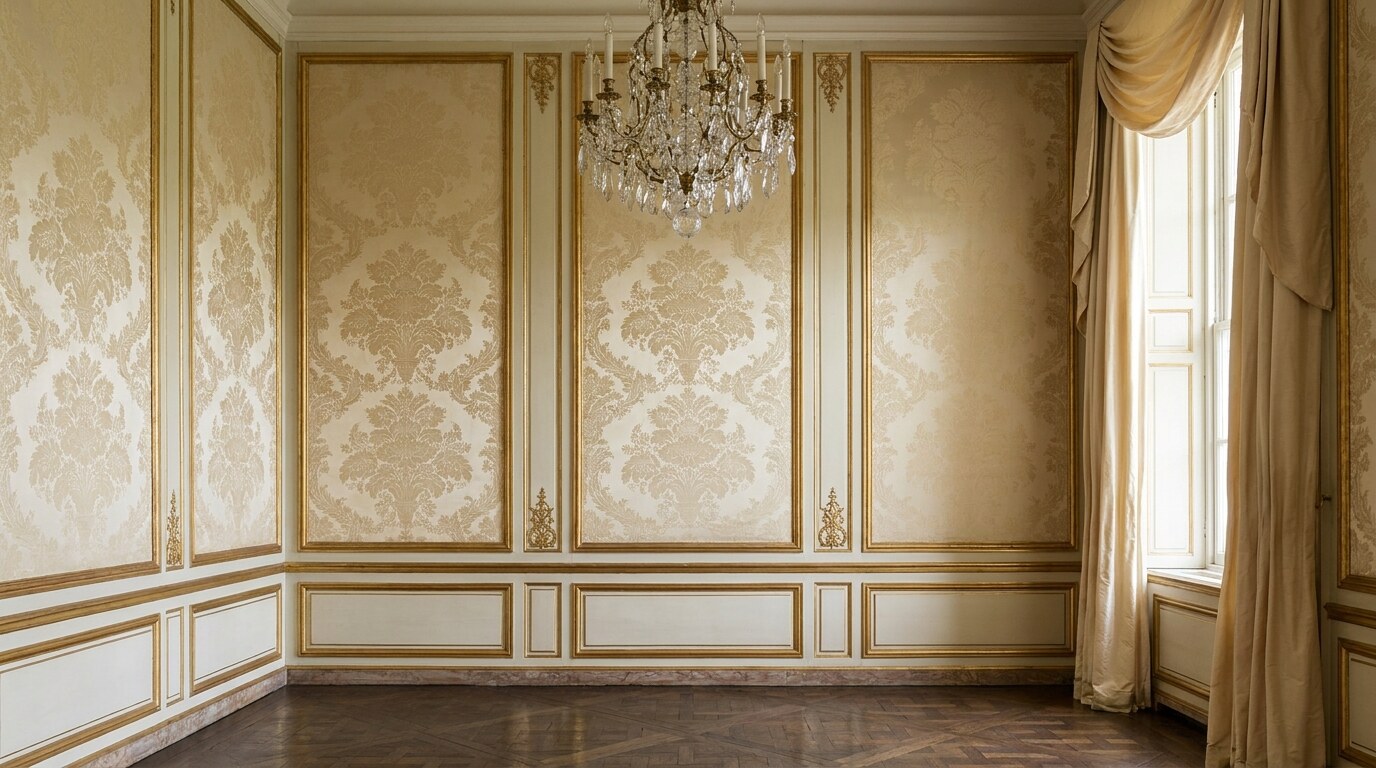
Three specification questions recur on silk-damask wallcovering schemes. Width: heritage looms produce silk damask at 50 to 60 cm wide; modern wide-loom production reaches 130 to 160 cm but at significantly higher prices and limited pattern range. Repeat: classical patterns typically repeat at 30 to 90 cm vertically, requiring careful matching at vertical seams. Joining: panels are seamed by hand-stitching with matched silk thread on the reverse, mounted on hessian backing stretched over softwood battens at 20 mm depth from the finished wall, and trimmed with silk gimp or passementerie at the panel perimeter.
Pattern repertoire
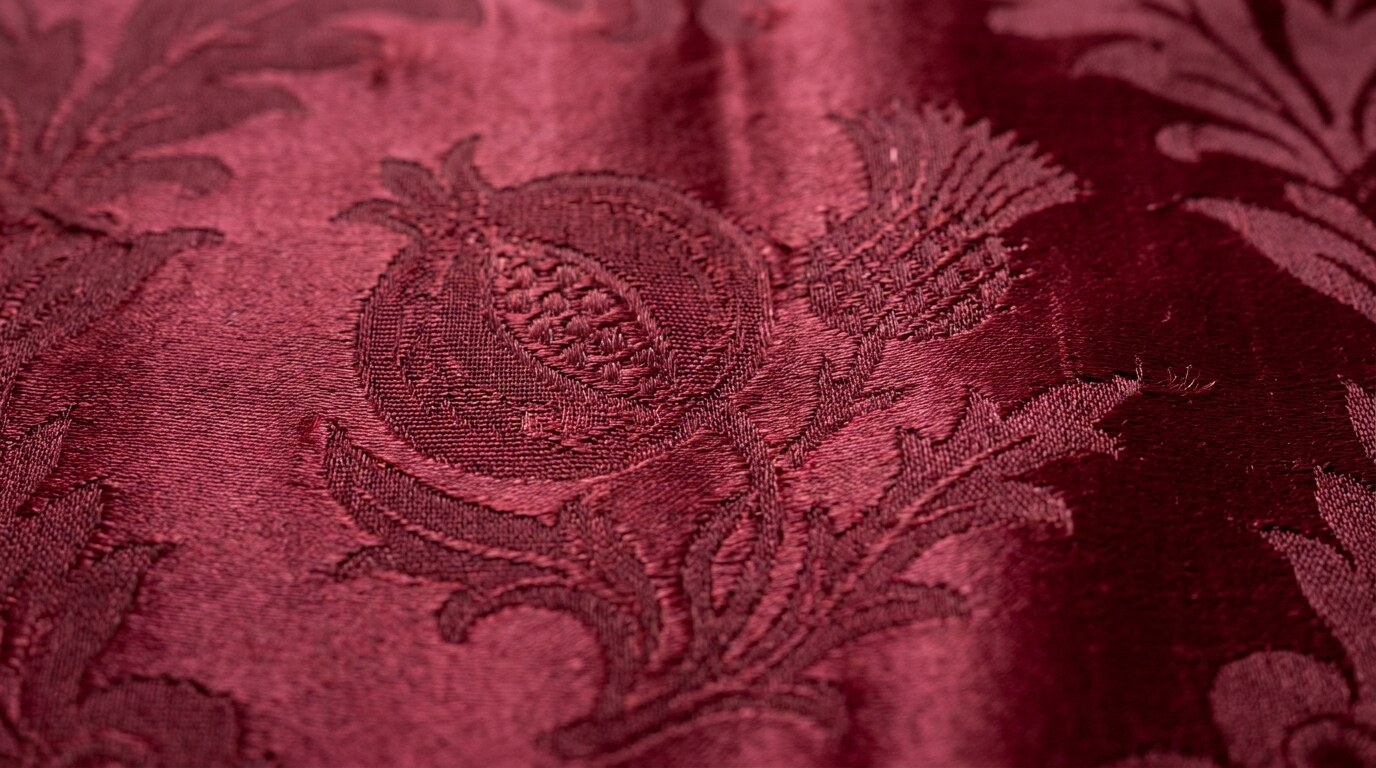
Three pattern families dominate silk damask wallcovering specification. Renaissance pomegranate-and-thistle patterns, drawn from 15th and 16th-century Italian designs, work in formal drawing rooms and dining rooms; the Mariano Fortuny "Granada" pattern (designed Venice 1907 from a 16th-century original) remains the canonical example. Louis XIV grande dimension patterns, with bold symmetrical bouquets at 60–90 cm vertical repeat, suit double-height state rooms. Empire-period laurel and ribbon patterns, with smaller 25–35 cm repeats, fit Regency and Federal-style libraries.
Prices and lead times in 2026
Silk damask priced over €800 per metre run typically reflects a fabric weight of 80 to 120 grams per square metre and a brocaded warp of three or more colours. Lead times for restoration-grade silk damask, woven from a heritage archive design, range from 12 to 28 weeks at Tassinari & Chatel and Antico Setificio Fiorentino; modern wide-loom production at Rubelli and Lisio reaches 4 to 8 weeks for stocked patterns. Bespoke design (a new pattern derived from a client's archival source, with a new Jacquard card cycle cut) adds €18,000 to €45,000 to a project as a one-time setup fee plus 22 to 36 weeks lead time.
Maintenance and longevity
Installed silk damask wallcoverings have documented service lives of 30 to 60 years before requiring replacement, with the principal failure modes being light bleaching of natural dyes (preventable by UV-filtering window glazing and low ambient light), grease accumulation in dining rooms (cleanable by a textile conservator using dry methods), and structural fatigue at battens (preventable by careful condition monitoring at 5-year intervals). The 1962 Salon de Compagnie reinstallation at Versailles, completed by Tassinari & Chatel under Mobilier National supervision, remained in service 58 years before re-weave 2020–2021, illustrating the upper service envelope.
The forward research question for this journal is the surviving pre-1700 silk damask wallcovering installations across Europe, of which seven are currently documented in publicly accessible interiors but several private chapels and family houses are believed to retain earlier in-situ examples not yet catalogued.
References and further reading
- Tassinari & Chatel, Lyon.
- Prelle, Lyon.
- Antico Setificio Fiorentino, Florence.
- Rubelli, Venice.
- Fondazione Lisio, Florence.
- Mobilier National.