
Anatomy of a Classical Room: Dado, Frieze, Cornice, Picture Rail Defined
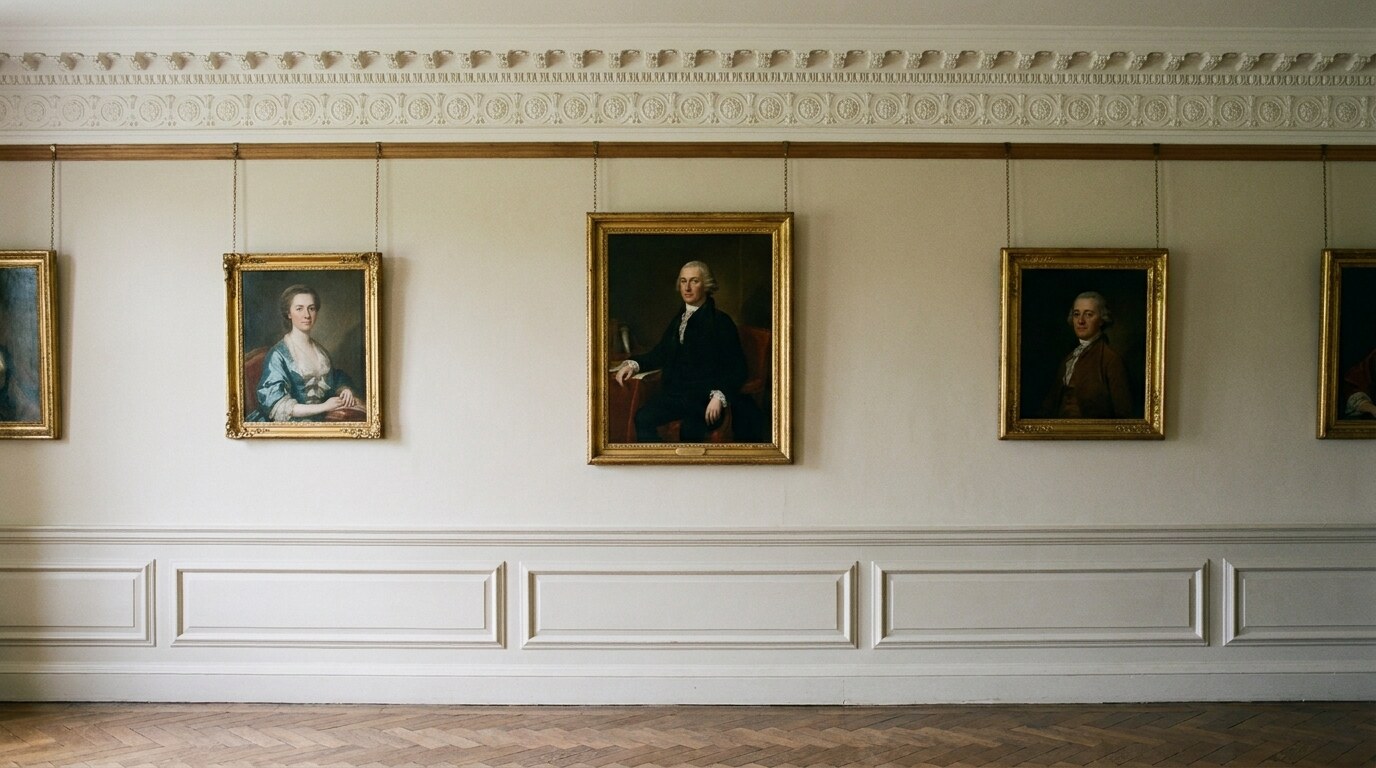
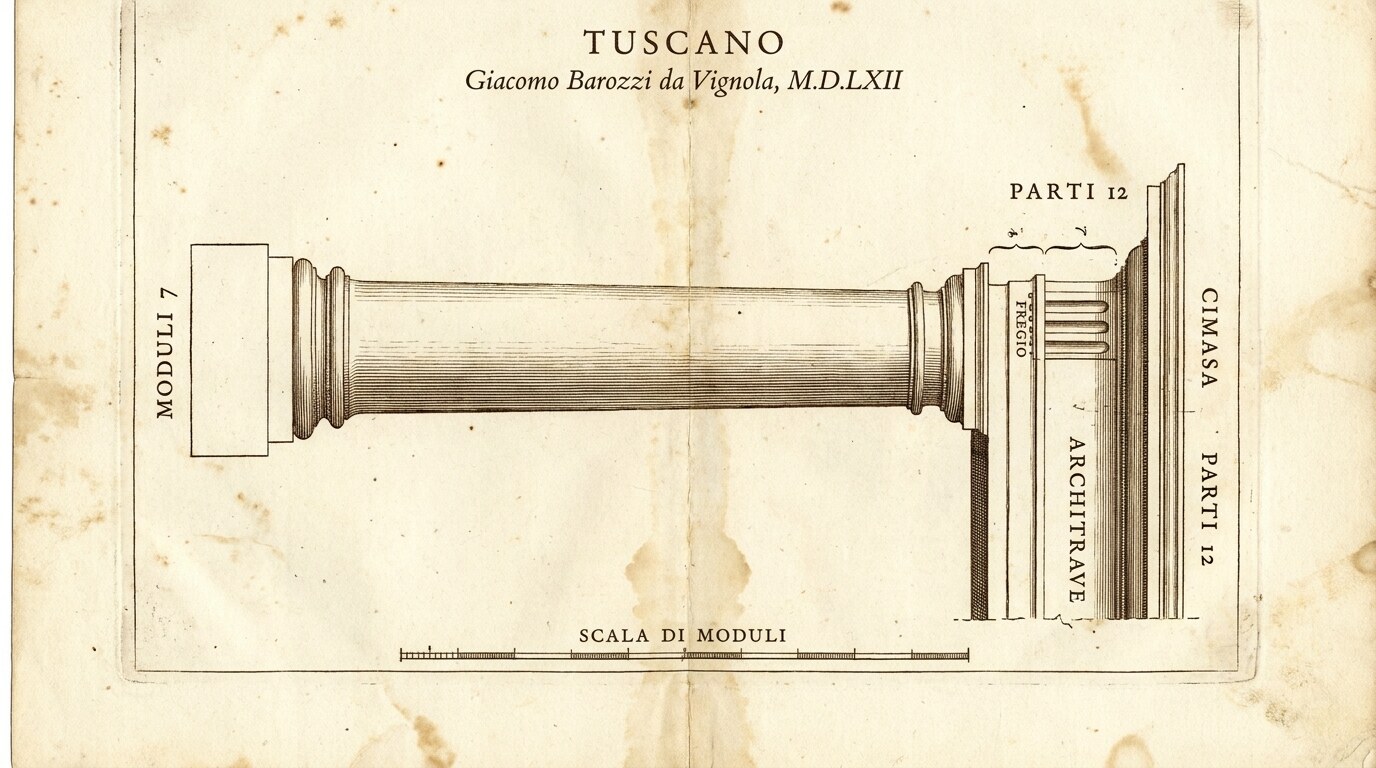
A classical room is composed of a vertical hierarchy of named mouldings, listed from floor to ceiling: skirting (or base), surbase, dado rail (chair rail), panelled or decorated dado, wall field, picture rail, frieze, and cornice. The proportions between these elements follow the orders codified by Giacomo Barozzi da Vignola (Regola delli cinque ordini d'architettura, 1562) and adapted to British practice by Sir William Chambers (A Treatise on the Decorative Part of Civil Architecture, 1759).
A floor-to-ceiling diagram in text
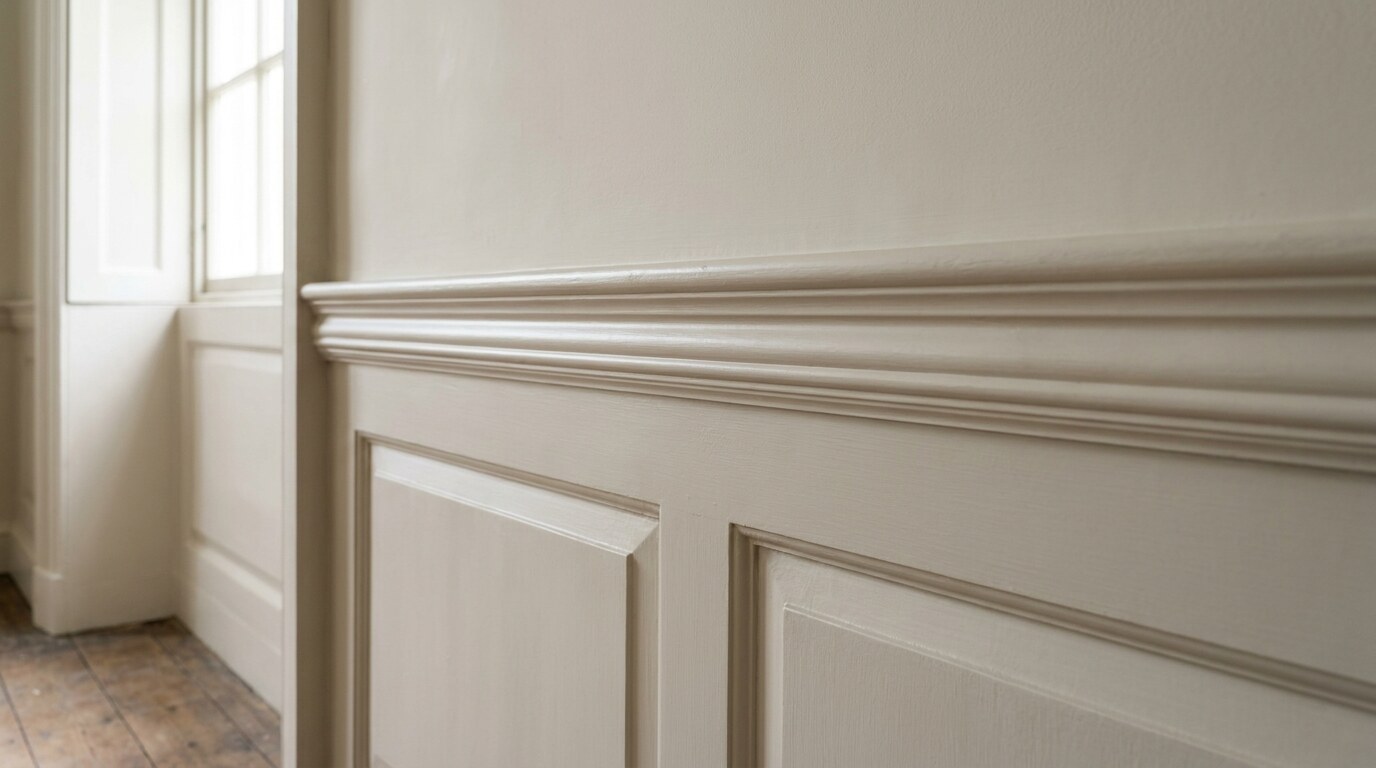
The named elements of a classical wall, from floor to ceiling, are: (1) skirting or base, the timber moulding running along the base of the wall, typically 100 to 240 mm tall in 18th-century work; (2) surbase (where used), a low secondary moulding above the skirting; (3) dado rail or chair rail, the horizontal moulding at chair-back height, typically at 900 mm above finished floor; (4) dado, the panelled or papered field below the dado rail; (5) wall field, the principal wall surface above the dado rail; (6) picture rail (where used, more common after 1830), a horizontal moulding 200 to 400 mm below the cornice from which paintings are hung on cords; (7) frieze, the decorative band immediately below the cornice; (8) cornice, the projecting moulding capping the wall at ceiling level.
Standard heights
Standard 18th-century dimensions for a 3.0 metre tall room. Standard Georgian dado-rail height in a 3.0 m tall room sits at 900 mm above finished floor; standard cornice projection in such a room sits at 150 to 200 mm; standard skirting height runs 150 to 240 mm; picture rail (where present) sits 250 to 400 mm below the cornice. In larger state rooms (4.0 m to 6.0 m ceiling height) the dado rail rises to 1.0 to 1.1 metres, the cornice to 220 to 380 mm projection, and the skirting to 280 to 380 mm.
Orders applied to interior wall composition
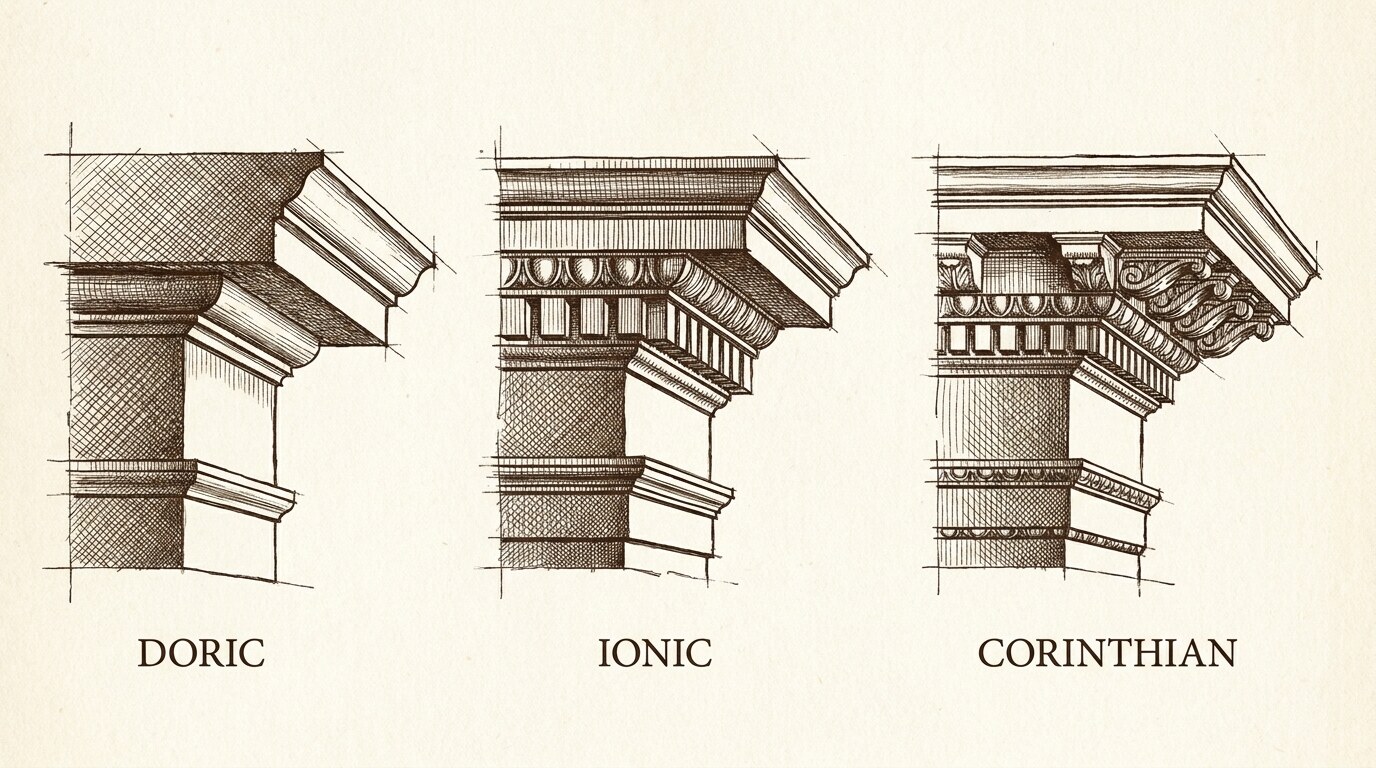
Classical wall composition derives its proportions from the architectural orders. Sir William Chambers's A Treatise on the Decorative Part of Civil Architecture, first published 1759, codified the use of classical orders for British interiors and went through eight editions by 1862, supplying the proportional system that British architects from the Adam brothers to Charles Cockerell used for interior wall composition. Vignola's earlier Regola (1562) had supplied the European master-source. The orders supply not only column proportions but the entablature ratios applied to interior frieze-and-cornice combinations: an Ionic interior typically has an entablature one-fifth the wall height, a Doric one-quarter.
Why a cornice profile alone tells you the period
Cornice profiles are dateable to a 20-year window with reasonable confidence. Georgian cornices (1714–1830) typically combine egg-and-dart or dentil ornament with bed mouldings of cyma recta and cyma reversa, with low overall projection. Regency cornices (1811–1830) introduce sharper Greek-revival profiles with palmette and anthemion friezes. Victorian cornices (1837–1901) add heavy leafwork in oak, vine, and acanthus enrichments, with deeper projection. Edwardian cornices (1901–1910) return to lighter Regency-revival vocabulary at smaller scale.
Pattern-book references for specifiers
Five pattern books supply the working specification vocabulary for classical interior mouldings. Vignola's Regola delli cinque ordini d'architettura (1562) remains the master-source for orders. Chambers's Treatise (1759) supplies the British application. Asher Benjamin's The American Builder's Companion (1806) supplies the American Federal-period equivalent. Encyclopédie's Architecture volumes (Diderot and d'Alembert, 1762–1772) supply the French equivalents in plate form. The 21st-century reissue of these books by Dover and by Princeton Architectural Press provides accessible working copies.
Pitfalls when mixing modern ceiling heights with classical proportions
Three pitfalls recur when applying classical proportions to modern construction. The first is low ceilings: rooms below 2.7 metres clear ceiling height cannot accommodate a full Georgian wall composition without compressing every element; specifiers should omit either the picture rail or the dado in such cases. The second is open-plan continuity: a classical cornice running through an open-plan kitchen-living space ties the rooms visually but requires careful joint detailing where wall surfaces change material (kitchen tile to drawing-room papered field). The third is service overlay: modern HVAC and electrical require either a generous service zone above a suspended ceiling (which conflicts with classical cornice) or careful chasing within the wall thickness, both adding 10 to 18% to a classical refurbishment budget.
The forward research question for this journal is the surviving original pattern-book pages annotated by 18th-century British craftsmen, which RIBA Library catalogues 47 examples of but published transcription remains incomplete for the regional working copies.
References and further reading
- Victoria and Albert Museum, essay on architectural orders.
- Sir John Soane's Museum, library catalogue.
- RIBA Library.
- Historic England.