Sèvres Porcelain: Marks, Periods, and Use in Classical Interiors
Sèvres porcelain, produced at the Manufacture nationale de Sèvres founded 1740 at Vincennes and relocated to Sèvres in 1756 under royal patronage, falls into four collectible periods: Vincennes soft-paste 1740–1756, Royal Sèvres soft-paste 1756–1804, Imperial and Restoration hard-paste 1800–1830, and Second Empire and later 1850–present. Pieces are identifiable by interlaced-L marks, year letters (A = 1753 through PP = 1793), and painter's marks documented in Brunet and Préaud's Sèvres: des origines à nos jours (1978).
The four collecting periods
| Period | Dates | Body | Marks |
|---|---|---|---|
| Vincennes | 1740–1756 | Soft-paste (pâte tendre) | Interlaced Ls, no year letter typical pre-1753 |
| Royal Sèvres soft-paste | 1756–1804 | Soft-paste | Interlaced Ls + year letters A–Z then AA–PP |
| Imperial / Restoration | 1800–1830 | Hard-paste (pâte dure) | Hard-paste from 1772; Imperial eagle 1804–1814 |
| Second Empire and later | 1850–present | Hard-paste | Date stamps and various Republic marks |
Reading marks: interlaced Ls, year letters, painter's symbols
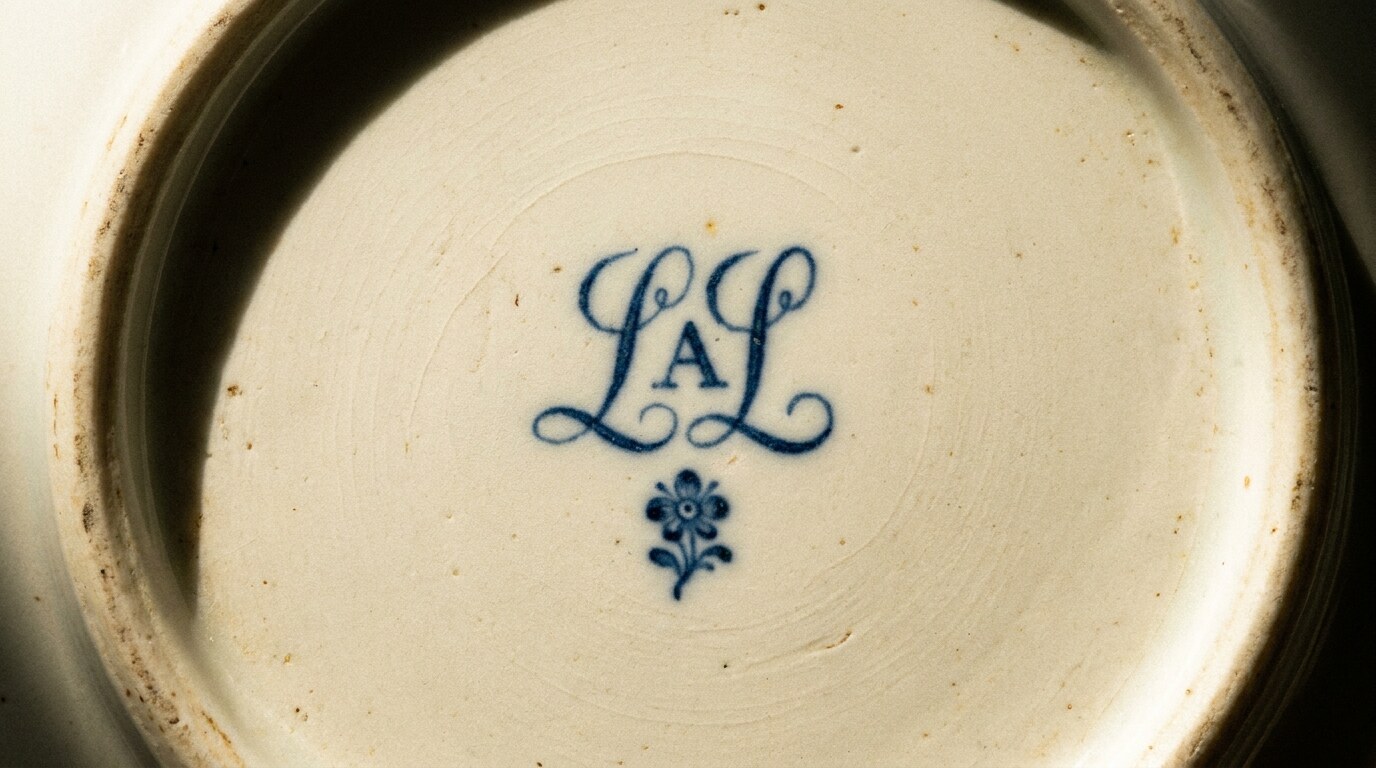
Sèvres year letters run A (1753) through Z (1777) for the first cycle and AA (1778) through PP (1793) for the second cycle; from 1801 the system was replaced by full year date marks. The interlaced double-L (cipher of Louis XV, retained under Louis XVI through 1789) appears in blue underglaze enclosed by a date letter. Painters' marks (small symbols beneath or beside the year letter) identify the painter from a published roster of approximately 200 documented Sèvres painters; the standard reference is Brunet and Préaud (1978). After the Restoration, painted year-and-painter marks became standard.
Body distinction: soft-paste vs hard-paste
Sèvres operated on soft-paste (pâte tendre) ceramic body until 1772 and on hard-paste (pâte dure) thereafter, with the two bodies coexisting until 1804 when soft-paste production ceased. Soft-paste is creamier in colour, slightly translucent, softer to the touch, and produces brighter ground colours; hard-paste is harder, whiter, more glassy, and produces slightly more muted grounds but accepts gilding more reliably. Authentication often turns on body identification: ultraviolet light reveals soft-paste fluorescence (cream-pink) distinct from hard-paste (cool blue-white).
Iconic ground colours
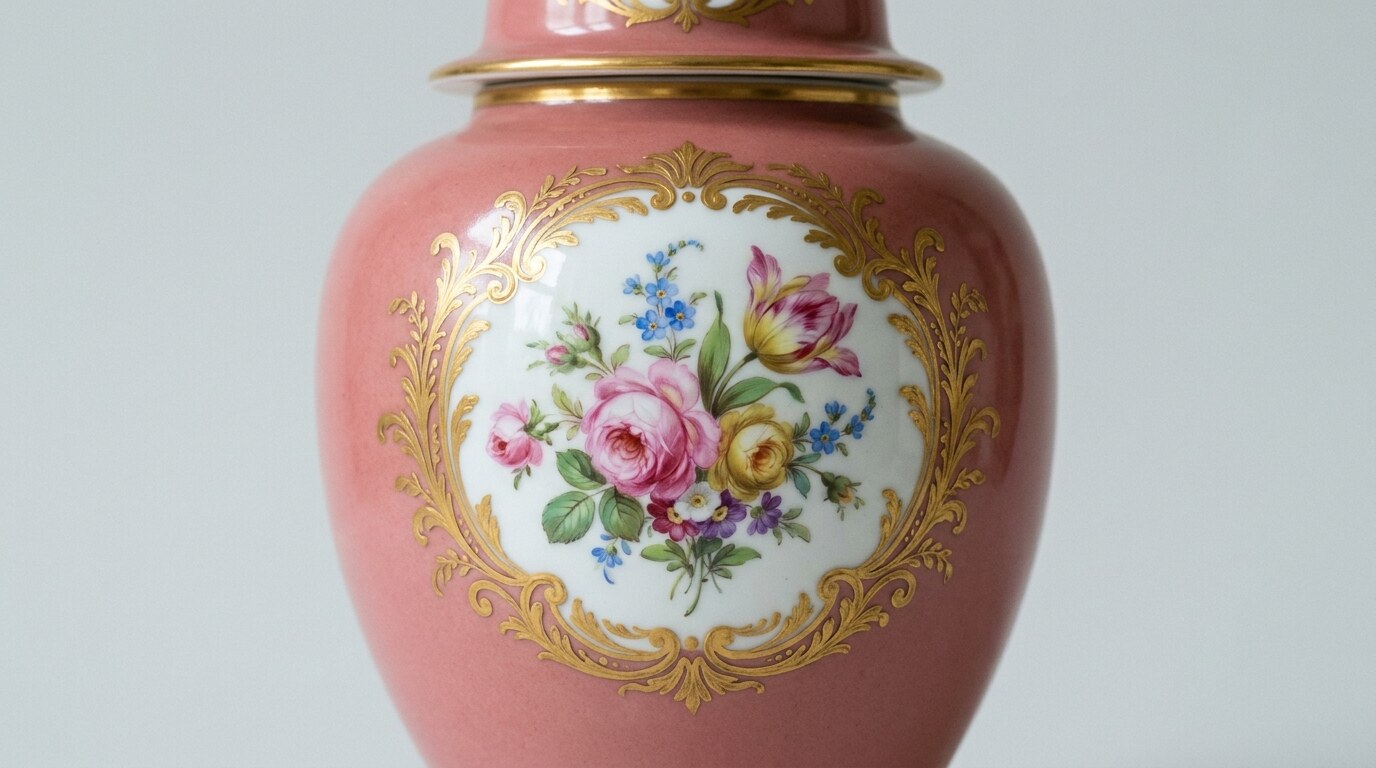
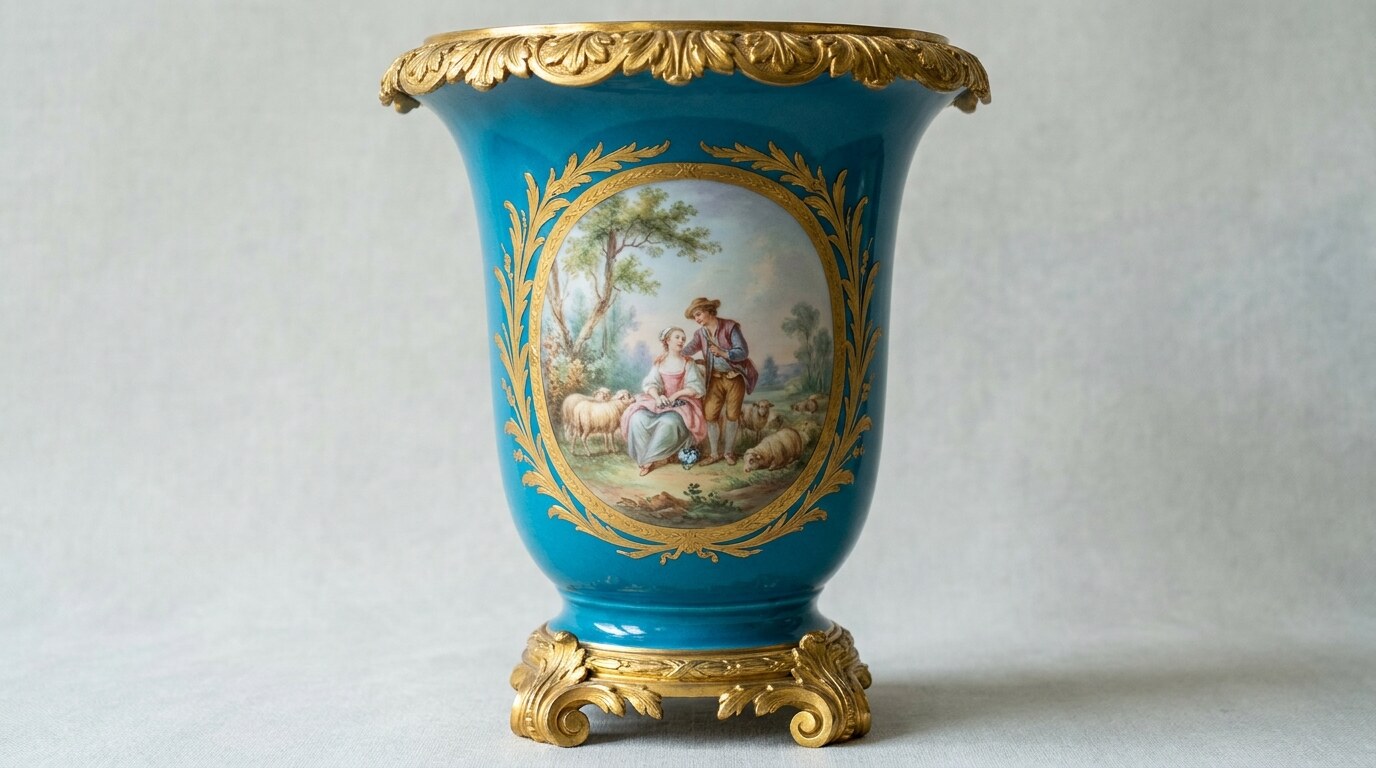
Five named ground colours form the canonical Sèvres palette. Bleu céleste (a turquoise-blue invented by Jean Hellot in 1753) is the most-recognised Sèvres ground. Bleu lapis (deep ultramarine, 1749) is the earliest specifically-named Sèvres ground. Rose Pompadour (a soft pink invented by Hellot in 1757) was named for the Marquise de Pompadour and used on a documented limited series of pieces 1757 to 1764. Rose Pompadour production ran only seven years and is the rarest of the named Sèvres grounds; documented pieces with rose Pompadour ground command premium prices in current auction trading. Vert pomme (apple green, 1756) and jaune jonquille (jonquil yellow, 1755) complete the principal palette.
Use in classical interiors
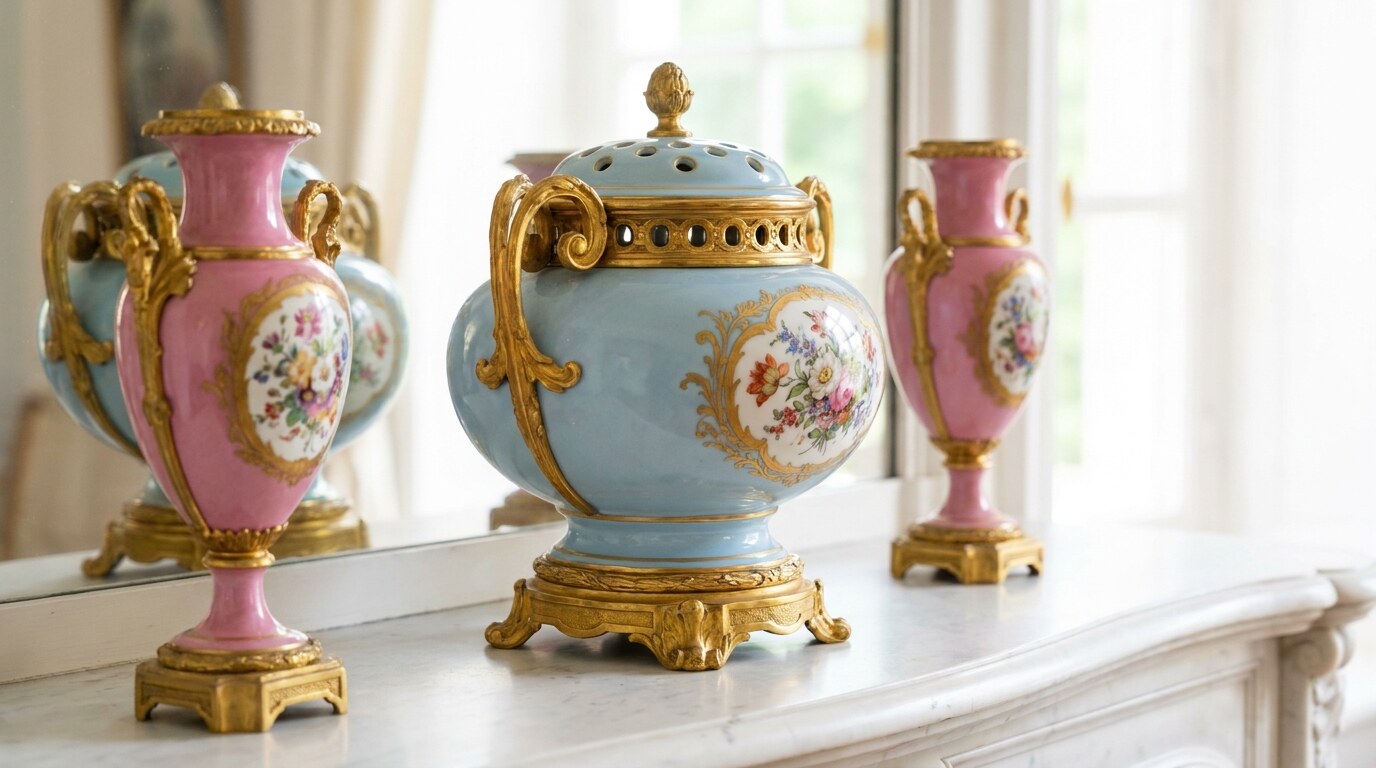
Three application classes recur in classical interior schemes. Mantel garnitures (a centre potpourri vase flanked by two smaller vases) sit on chimneypieces in drawing rooms and dining rooms. Occasional tables (typically circular or kidney-shaped) are mounted with painted Sèvres tops and gilt-bronze legs, particularly during the Louis XVI period. Vases on console tables (the largest pieces, typically vases-cuvettes at 35 to 60 cm height) form the principal display element in formal rooms.
Dealers and reference sources in 2026
Three reference collections allow specifiers to compare verified Sèvres at scale. The Wallace Collection in London holds extensive 18th-century Sèvres acquired by the 4th Marquess of Hertford during the 1840s and 1850s, the largest single Sèvres collection outside France. The Cité de la céramique - Sèvres et Limoges presents the manufactory's own historical holdings on its Sèvres campus. The Met and the V&A both hold representative collections. Documented Sèvres at auction is sold at Christie's, Sotheby's, and Bonhams in their European decorative-arts sales, with median prices for documented 1755–1790 pieces running £4,500 to £85,000 across 2024–2025.
The forward research question for this journal is the unpublished factory inventory of the Bourbon Restoration period (1815–1830), of which the manufactory's own records survive at Sèvres but selective publication has covered only the documented Crown commissions, leaving private and diplomatic gifts under-catalogued.
References and further reading
- Wallace Collection, Sèvres holdings.
- Cité de la céramique - Sèvres et Limoges.
- The Met, ceramics collection.
- Victoria and Albert Museum, ceramics.