
Sir John Soane's Colour Palette: Pigments, Mixes, and Documented Recipes
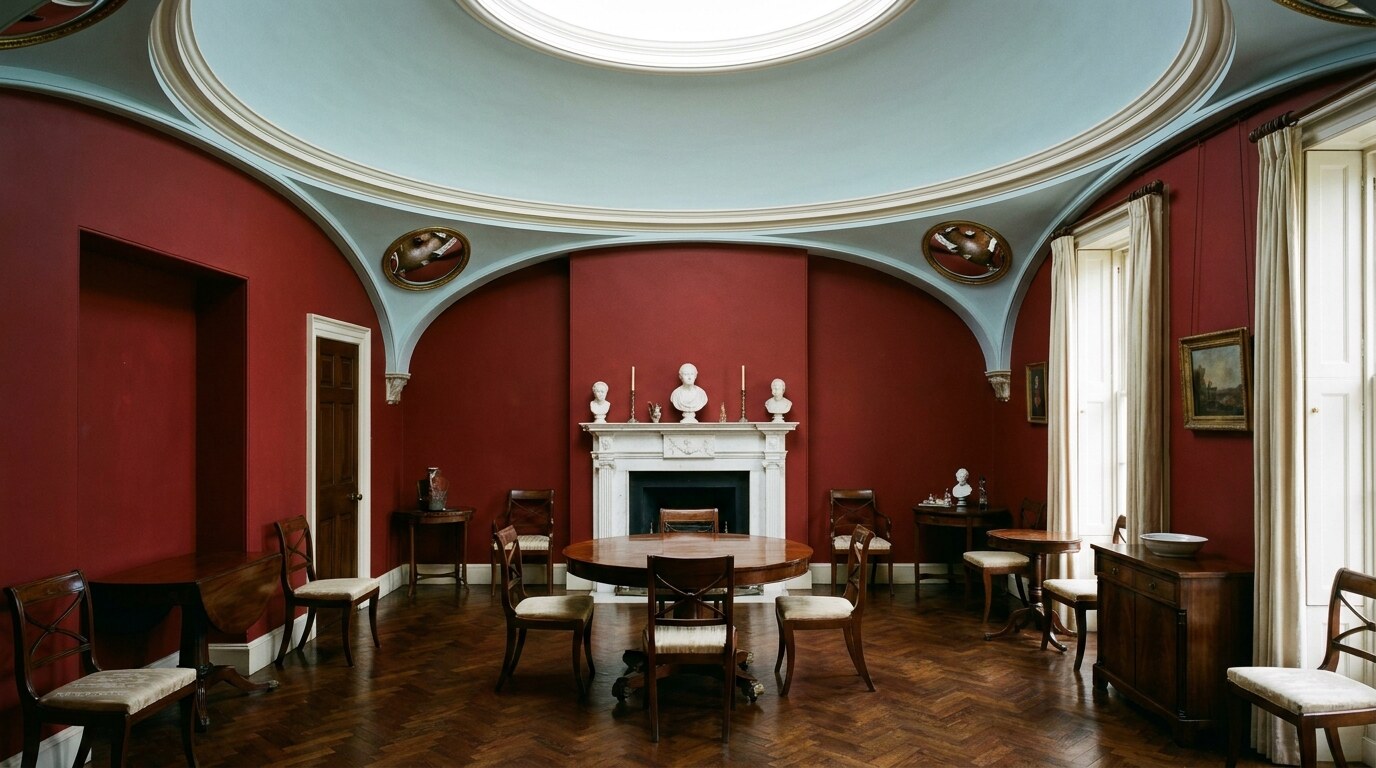
Sir John Soane (1753–1837) used a documented and unusually specific interior colour palette in his architectural and decorative commissions, anchored on three signature colours: Patent Yellow (a 1781 lead-based pigment), Pompeian red, and a chalky stone. The palette is recorded in surviving paint stratigraphies at his Lincoln's Inn Fields house-museum, the Bank of England Stock Office (1791–1793, demolished 1925), and Pitzhanger Manor (1800–1810, restored and reopened 2019).
Three pigments that define the Soane palette
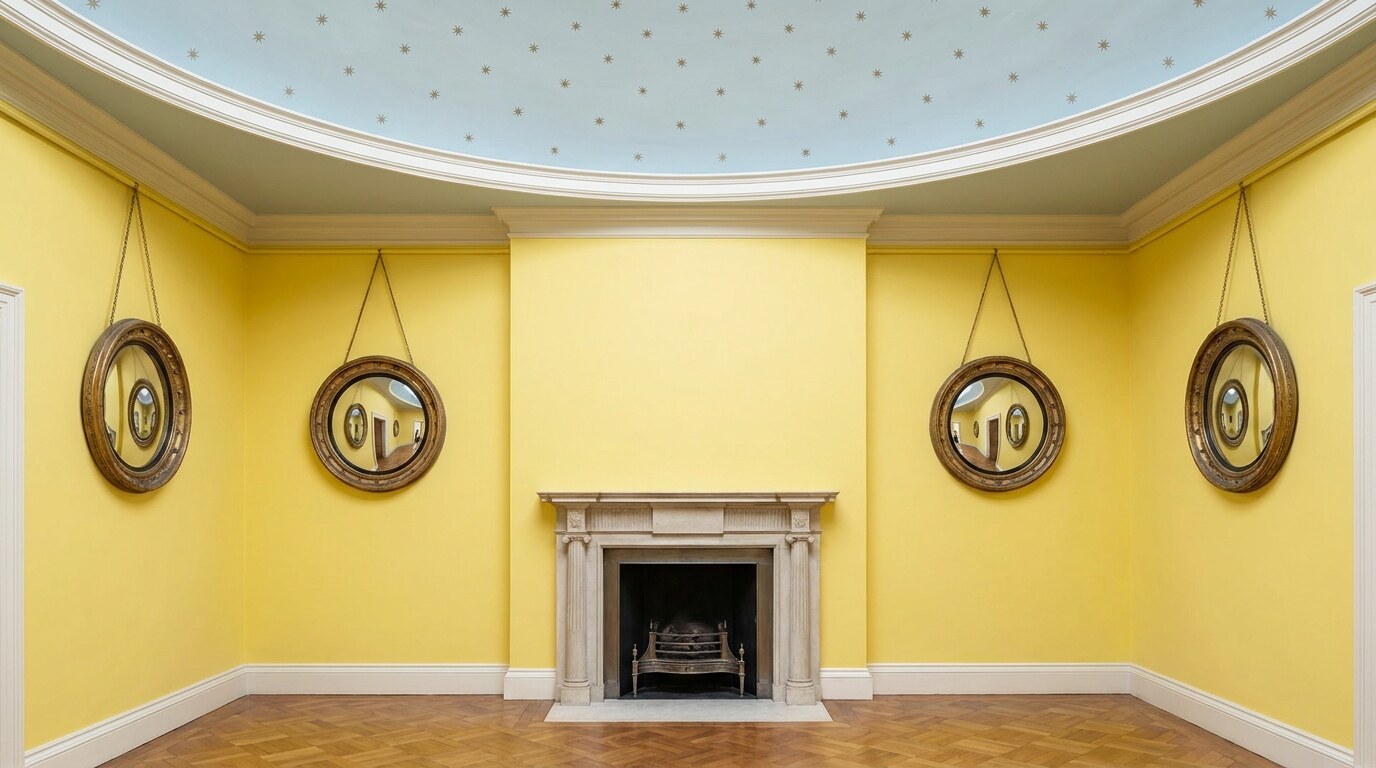
Three pigments, used at consistent proportions across more than 30 documented Soane interiors, define the recognisable Soane palette. Patent Yellow (lead oxychloride) was patented in London in 1781 by James Turner under patent number 1316, manufactured by reacting lead acetate with sodium chloride to produce a clear primrose yellow lead pigment with high covering power; Soane specified Patent Yellow at Lincoln's Inn Fields, the Bank of England, and Pitzhanger Manor. Pompeian red, a deep brick-red derived from earth pigments (red ochre and madder lake combined in oil), entered Soane's palette after his 1779 Italian Grand Tour and his 1819 visit to the Naples Archaeological Museum's Pompeian collection. The chalky stone (a soft warm grey-cream produced by mixing white lead, raw sienna, and a trace of black) provides the neutral ground for picked-out cornices and architraves throughout Soane's interiors.
The 1781 Patent Yellow story
Patent Yellow's commercial life ran from 1781 to approximately 1860, when it was supplanted by the cheaper and more chemically stable chrome yellow (lead chromate, patented 1809). Soane's specification of Patent Yellow at Lincoln's Inn Fields was confirmed by Patrick Baty's 2000 paint stratigraphy at the museum, in which Patent Yellow was identified as the primary 1813 layer in the Library, the Eating Room, and the Picture Room. Authentic Patent Yellow is no longer commercially produced because of lead-pigment health regulations; the closest modern matches use cadmium yellow (Edward Bulmer Natural Paint's "Patent Yellow") or single-pigment lead-tin yellow stand-ins for restoration purposes.
Pompeian red derivation and use
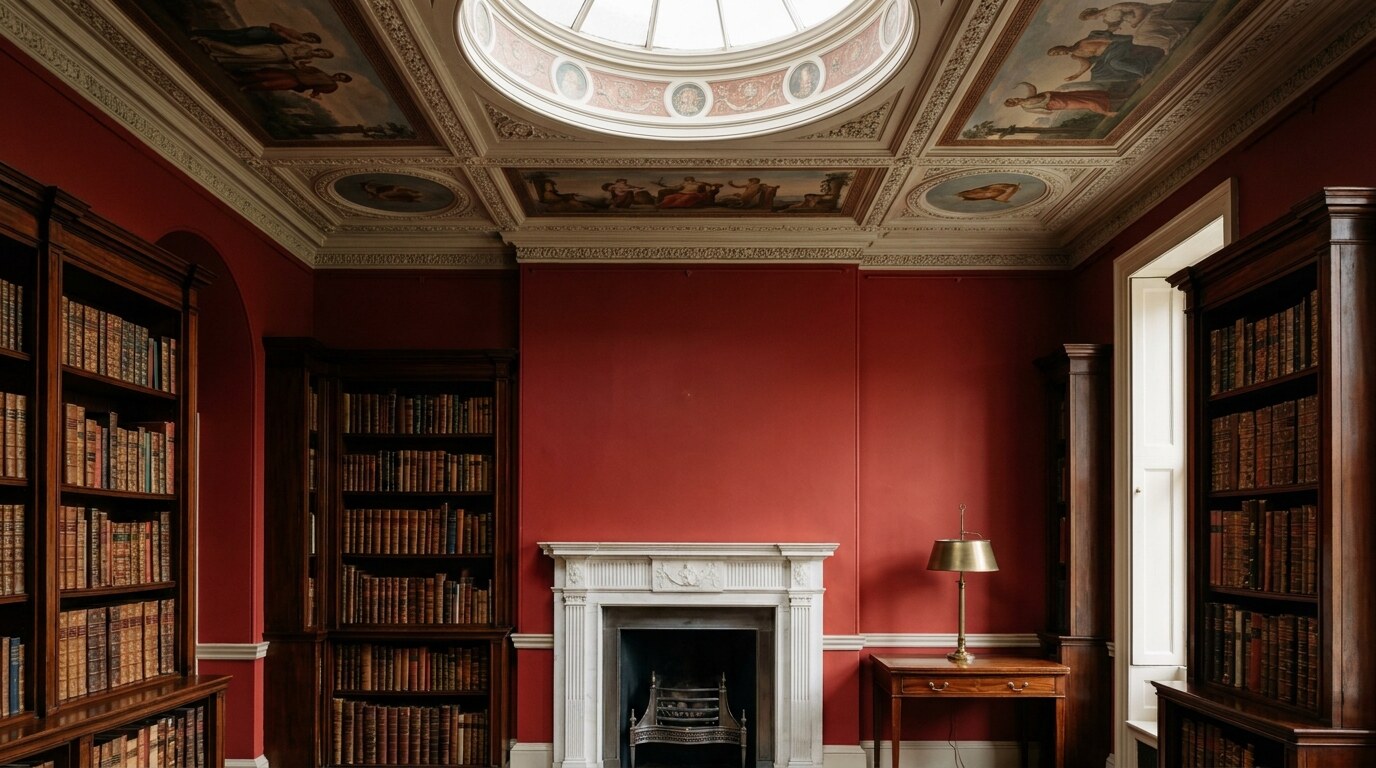
Pompeian red entered British interior decoration in the 1780s through the architects who returned from Italian Grand Tours. Soane applied Pompeian red as the dominant wall colour in the Library and Dining Room at Lincoln's Inn Fields, in the Stock Office at the Bank of England (recorded in pre-demolition photographs and Sir John Lucas's 1925 measured drawings), and in the Eating Room at Pitzhanger Manor. The pigment is properly an iron oxide red with red ochre cooler in tone than typical Indian red, mixed with white lead and applied in oil-based distemper or in oil-based paint over a sized ground.
Paint stratigraphy as restoration evidence
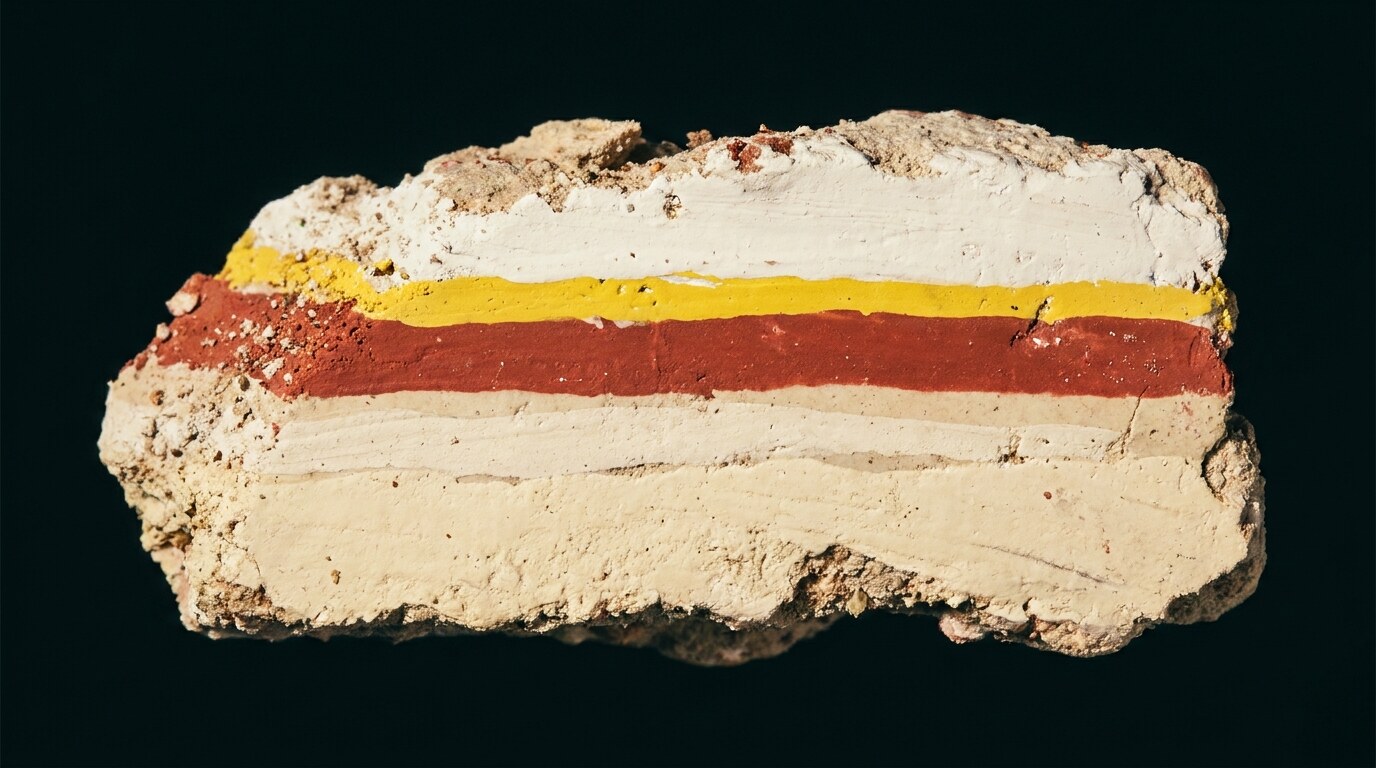
Paint stratigraphy, the laboratory analysis of micro-samples taken from a wall surface and cross-sectioned through all paint layers down to the original substrate, has been the principal evidence base for Soane interior restoration since the 1990s. Patrick Baty (Papers and Paints, London) has published paint analyses of more than 18 surviving Soane interiors at Lincoln's Inn Fields, archived at the Sir John Soane's Museum study room; Catherine Hassall (Hassall Painting Conservation, London) executed analyses for the Pitzhanger Manor restoration that informed 19 reinstated paint schemes when the museum reopened in March 2019.
Restored Soane interiors to visit
Three publicly accessible Soane interiors allow visitors to see the palette as restored. Sir John Soane's Museum at 13 Lincoln's Inn Fields, London (open Wednesday to Sunday) presents the Library, Dining Room, Breakfast Room, Picture Room, and Drawing Room in their documented 1813–1837 colour schemes. Pitzhanger Manor & Gallery at Walpole Park, Ealing, London, reopened March 2019 after a £12 million restoration. Dulwich Picture Gallery (designed by Soane 1811–1814) was restored 1999–2000 to a documented 1817 paint scheme.
2026 paint matches
Three British heritage paint suppliers publish documented Soane-period palette matches as of 2026. Edward Bulmer Natural Paint issues "Patent Yellow", "Pompeian Red", and "Eel" (a chalky stone match) in plant-based binder. Papers and Paints (founded 1960, London) supplies fully bespoke colour matching from sample chips, with formulations derived from Patrick Baty's published analyses. Farrow & Ball's "Citron" and "Eating Room Red" approximate the Soane primary palette at modern paint specifications.
The forward research question for this journal is the unrestored 19th-century overpainting at the Bank of England's surviving Soane vestibule fragments, currently held in storage by the Bank's Museum, of which paint cross-sections taken in 2017 are partially published but stratigraphic interpretation is incomplete.