Versailles, Chantilly, Herringbone, Chevron: The Five Parquet Patterns Specifiers Need
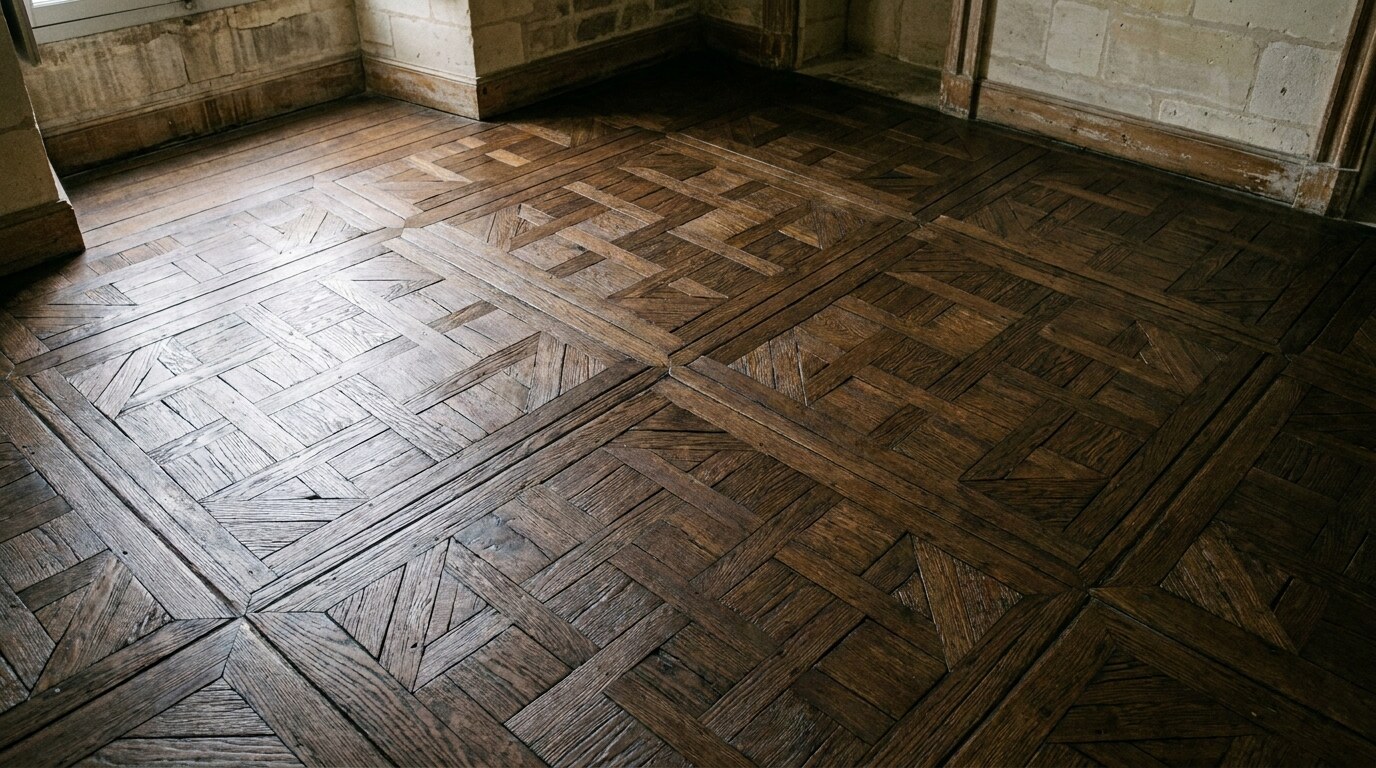
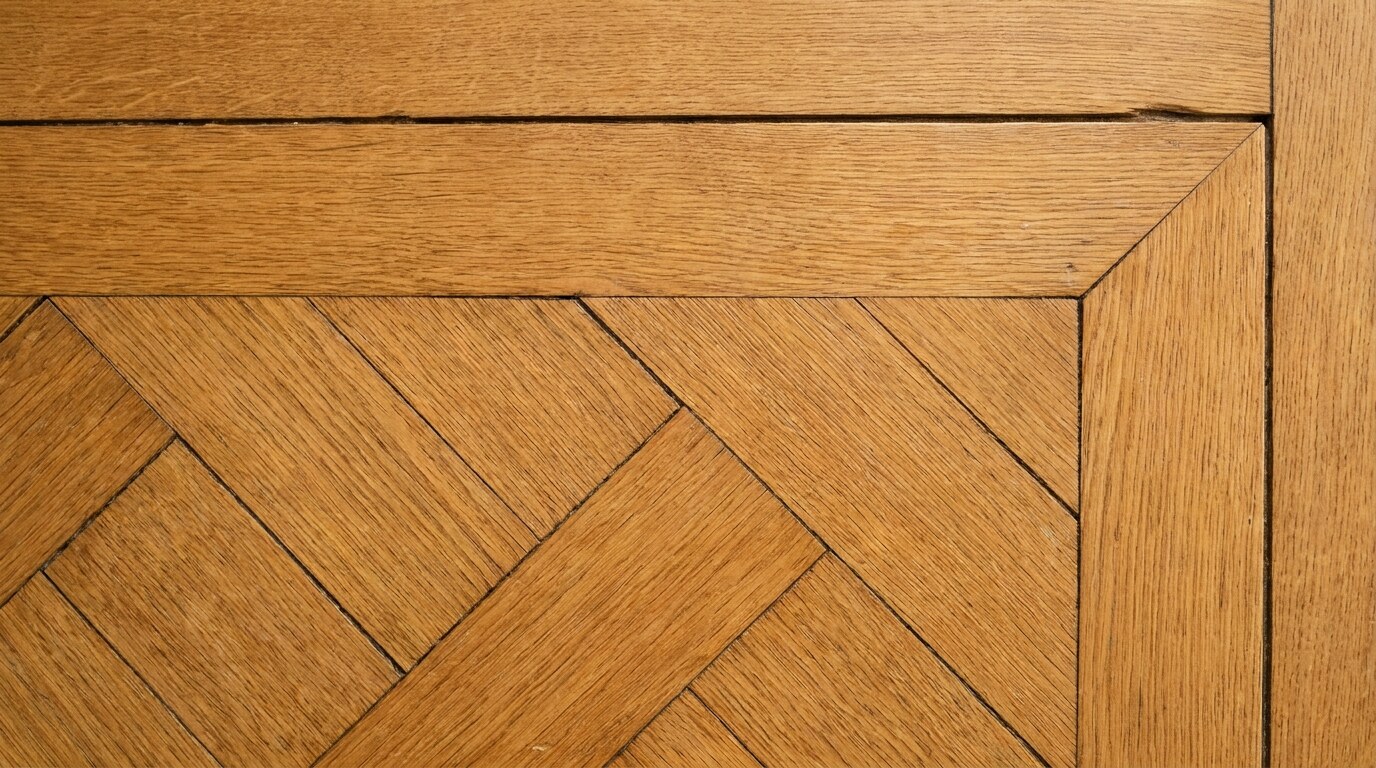
Five parquet patterns serve almost the entire classical interior repertoire: parquet de Versailles (1.0 m or 0.93 m square panels of interlocking diagonal slats, codified at Versailles 1684); Chantilly (a tighter four-square panel often associated with the Petit Trianon); point de Hongrie or chevron (45° or 60° angled boards meeting end-to-end); herringbone (90° angled boards interlocking in steps); and bâtons rompus (running-bond plank). Each pattern carries period and stylistic associations a specifier should match to the architecture.
Defining each pattern
Parquet de Versailles is built from square panels assembled off-site, each panel composed of two diagonal cross-pieces and a perimeter frame, the diagonal slats interlocking in the panel centre. Parquet de Versailles was first installed at the Château de Versailles in 1684 under François Le Vau (architect to Louis XIV), replacing earlier marble flooring in the king's private apartments because marble retained too much cold underfoot. Standard French specification today produces panels at 1,000 mm square; historic Versailles panels measured 800 mm to 1,150 mm square depending on the installation year and the room dimensions. Chantilly is a tighter pattern, typically 600 to 800 mm square, with four cross-quartered diagonals rather than two; the pattern is associated with the Château de Chantilly and reproduced at the Petit Trianon.
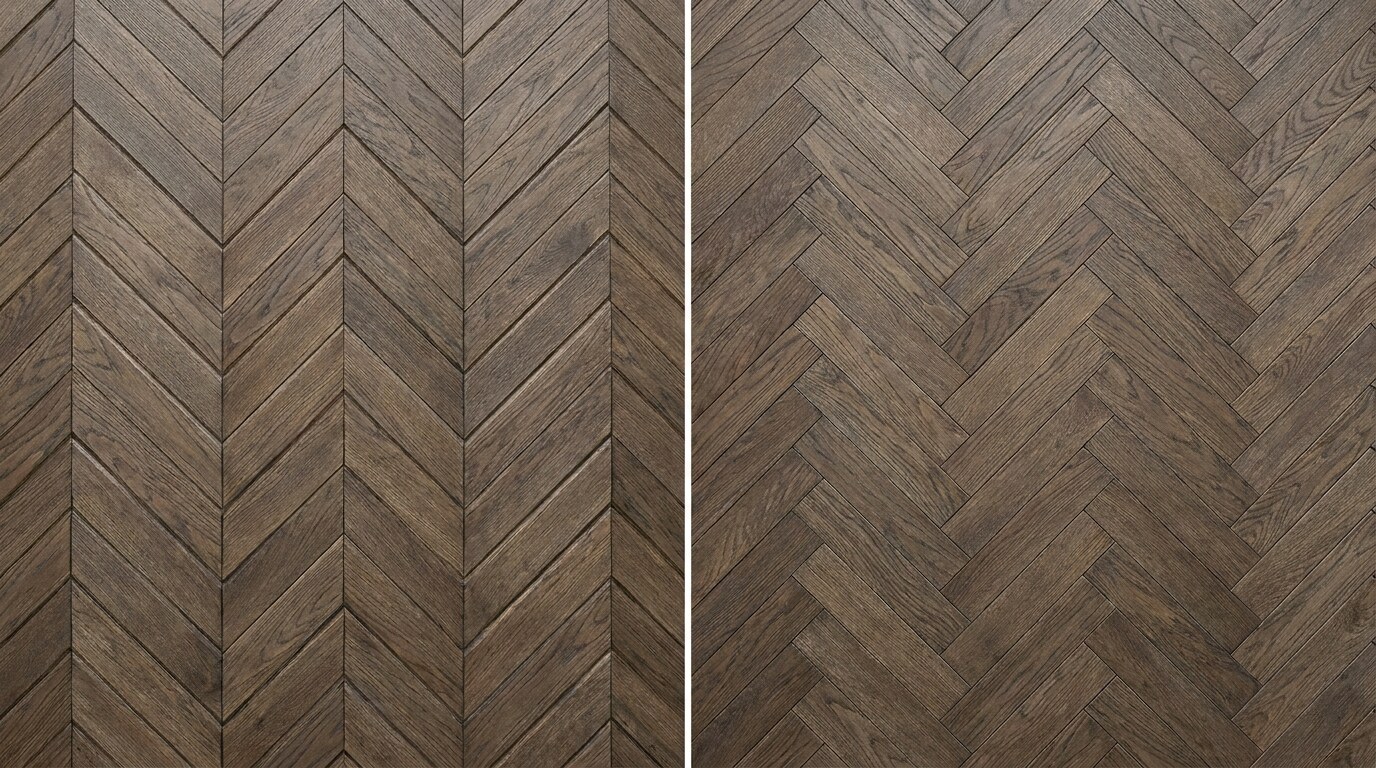
Point de Hongrie (chevron) places oak boards at 45° or 60° to the room axis, with the boards meeting end-to-end at a clean joint, producing an arrow-shaped silhouette. Herringbone uses similar boards but at 90° to each other, interlocking in steps; the visual difference is that chevron creates a continuous ridge while herringbone creates an interlocking step. Point de Hongrie boards are typically cut at 45 degrees in French production and 60 degrees in Italian and Hungarian production, producing visibly different joint angles. Bâtons rompus is the simplest pattern: long planks laid end-to-end in running bond, with the board ends staggered at random or at regular three-board intervals.
Period associations
| Pattern | Period association | Typical room |
|---|---|---|
| Parquet de Versailles | Louis XIV–Louis XVI (1684–1789), and any classical revival | Salons, drawing rooms, libraries |
| Chantilly | Louis XV–Louis XVI | Smaller intimate rooms, boudoirs |
| Chevron / Point de Hongrie | 17th century onward; Empire and Restoration | Galleries, dining rooms |
| Herringbone | French and English vernacular 17th century onward | Hallways, kitchens, bedrooms |
| Bâtons rompus | All periods (vernacular and modern) | Service rooms, bedrooms, modern interpretations |
Standard panel and board dimensions
Parquet de Versailles panels run 1,000 mm or 1,150 mm square in current French production; board thickness is typically 21 mm with a 6 mm wear layer for engineered construction or 22 mm solid. Chevron and herringbone boards in French production measure 90 mm to 130 mm wide by 600 mm to 900 mm long, with thickness 14 to 22 mm; English production typically uses 70 mm to 90 mm widths. Bâtons rompus boards measure 130 mm to 220 mm wide by 1,200 mm to 2,400 mm long.
Substrate, expansion, and species choice
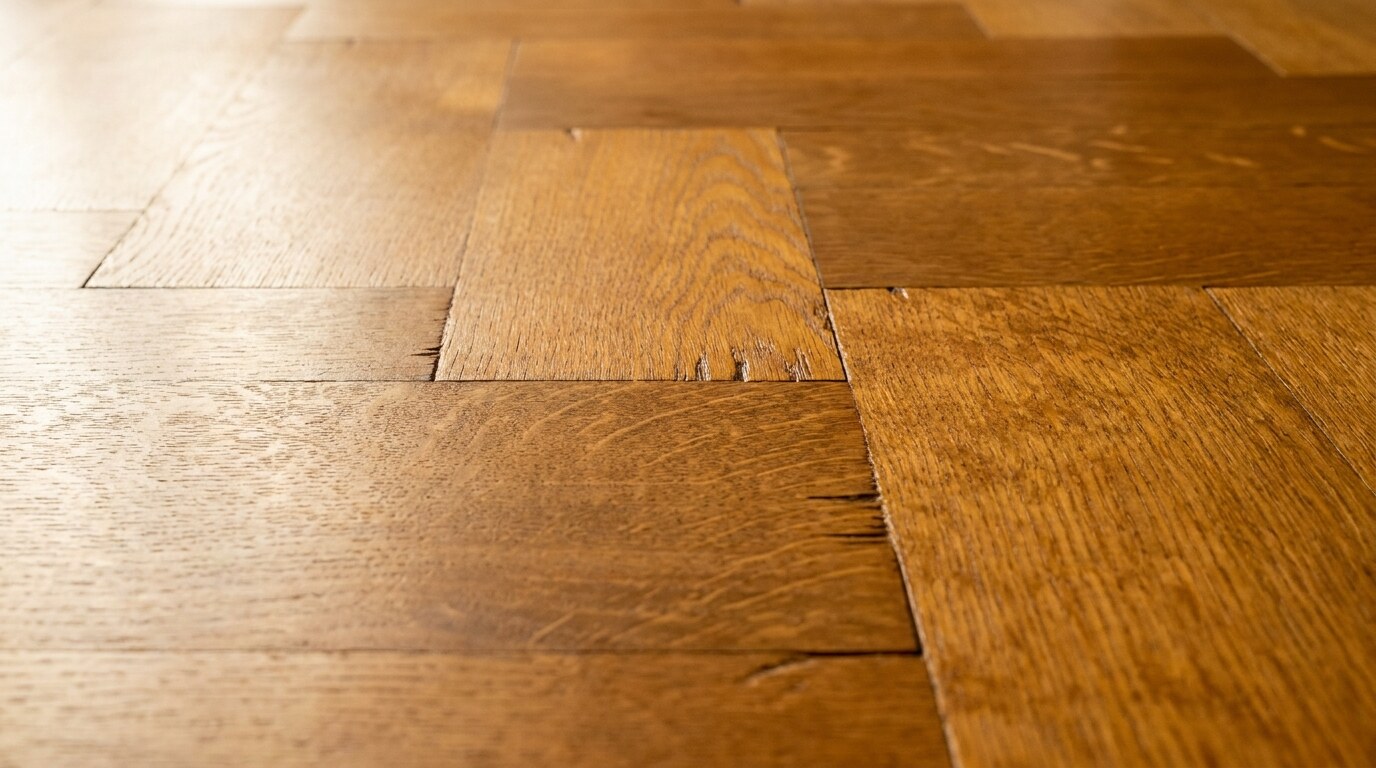
French oak (Quercus robur) is the historic and current default species, selected for its dimensional stability and tannin content (the tannin reacts with iron and ammonia to produce the fumed-oak tones characteristic of antique French floors). Subfloor preparation requires a moisture content match between substrate and parquet (8 to 12% target), with a 14-day acclimatisation period before installation. Underfloor heating works under properly engineered parquet floors but limits maximum temperature to 27 °C at the surface and requires an ambient humidity-controlled environment (45 to 55% RH); without humidity control the boards open seasonally.
Finishing
Three finishing systems cover almost all current production. Hard-wax oil (Osmo, Rubio Monocoat) penetrates the timber surface, retains the matte appearance of antique floors, and tolerates spot repair without re-sanding the whole floor. Polyurethane-lacquered finishes (Bona Traffic, Junckers HP Sport) provide higher abrasion resistance but produce a film that yellows with age and requires full-floor re-sanding when worn through. Traditional fumed-and-waxed finishes (ammonia fume, then carnauba wax) match the antique appearance most closely and are specified for restoration projects, but require an experienced finisher and a 4 to 6-week conditioning period.
Suppliers in 2026
Three suppliers concentrate the European classical-parquet market. Atelier des Granges (founded 1976, Burgundy, France) produces parquet de Versailles and Chantilly panels in solid French oak from approximately €420 to €820 per square metre as of 2026, with hand-finished antique-board production at higher prices. Element 7 (London, founded 2002) supplies engineered chevron and herringbone for UK projects with shorter lead times. Antique floors removed from châteaux and English country houses are brokered through Antique Floors London (Battersea) and Antique Oak Flooring Company (Suffolk).
The forward research question for this journal is the original substrate construction of the parquet de Versailles installed in the King's Petit Appartement 1684, of which a 2018 conservation survey published by the Château de Versailles documented unexpected ash-and-elm secondary timbers under the visible oak surface, indicating an early-period substrate practice not previously known.
References and further reading
- Château de Versailles (parquet history and conservation).
- Atelier des Granges, Burgundy.
- Element 7, London.
- Château de Chantilly.