
Italian Cassettoni: Genoese, Venetian, and Roman Variations
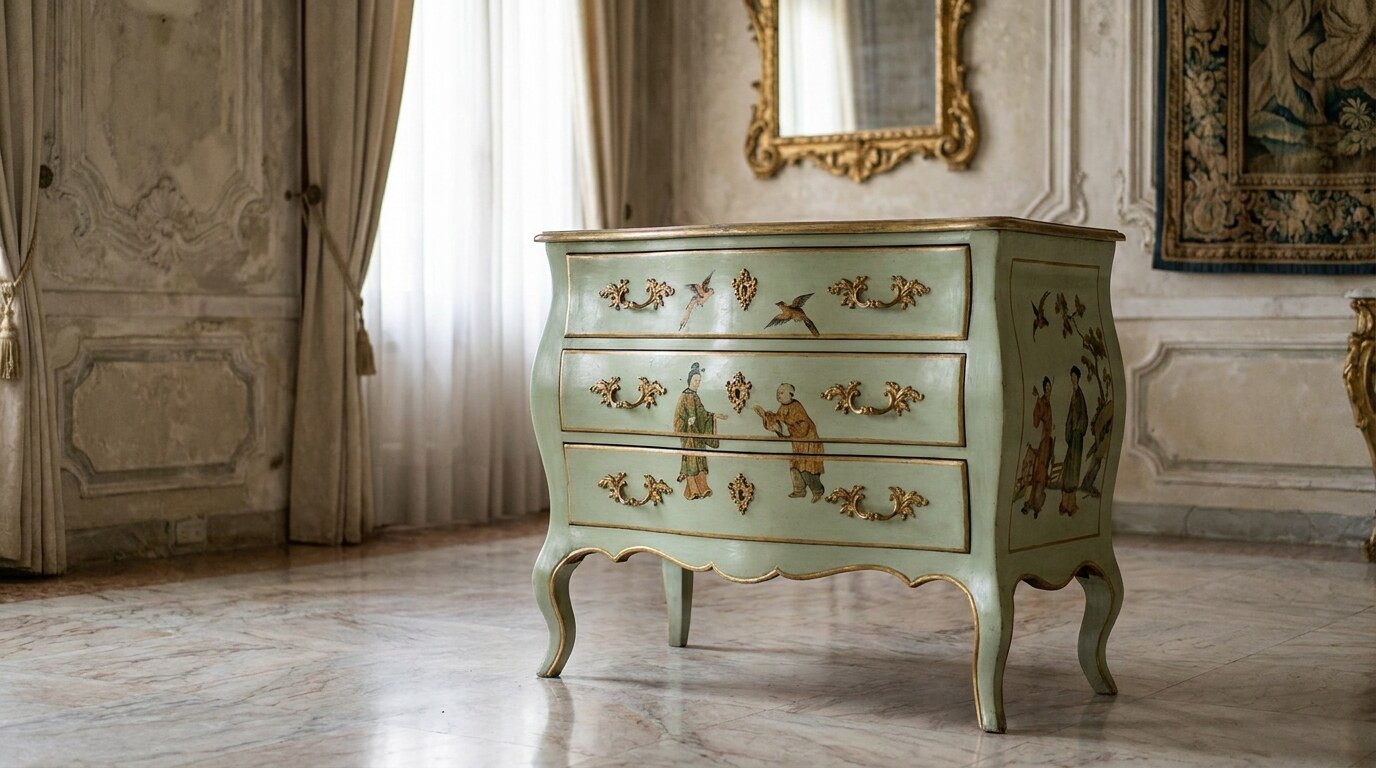
The cassettone, the Italian floor-standing chest of drawers developed from the Renaissance cassone between 1690 and 1820, varies sharply by region: Genoese cassettoni (Liguria) carry deeply carved giltwood serpentine fronts; Venetian cassettoni show painted lacquer (lacca povera or lacca veneziana) on bombé fronts; and Roman cassettoni present rectilinear walnut or rosewood marquetry with restrained gilt-bronze mounts. Each regional school is documented in the furniture departments of the Galleria Sabauda (Turin), Museo Correr (Venice), and Museo del Palazzo di Venezia (Rome).
Defining cassettone vs cassone vs comò
Three Italian terms for chests sit on adjacent timeline branches. The cassone, the painted marriage chest of the 14th to 16th centuries, is a single-volume floor chest, hinged at the top, often with figurative front panels by named painters (Botticelli's documented cassone panels are now in the Louvre, the National Gallery London, and the Met). The cassettone, emerging c. 1690, is the multi-drawer floor cabinet that replaced the cassone as a chest of drawers, with three to five drawers and a flat or marble top. The comò, in 18th-century use, is sometimes interchangeable with cassettone but more often refers to the lower-rank serpentine-fronted three-drawer commode.
Genoese school markers
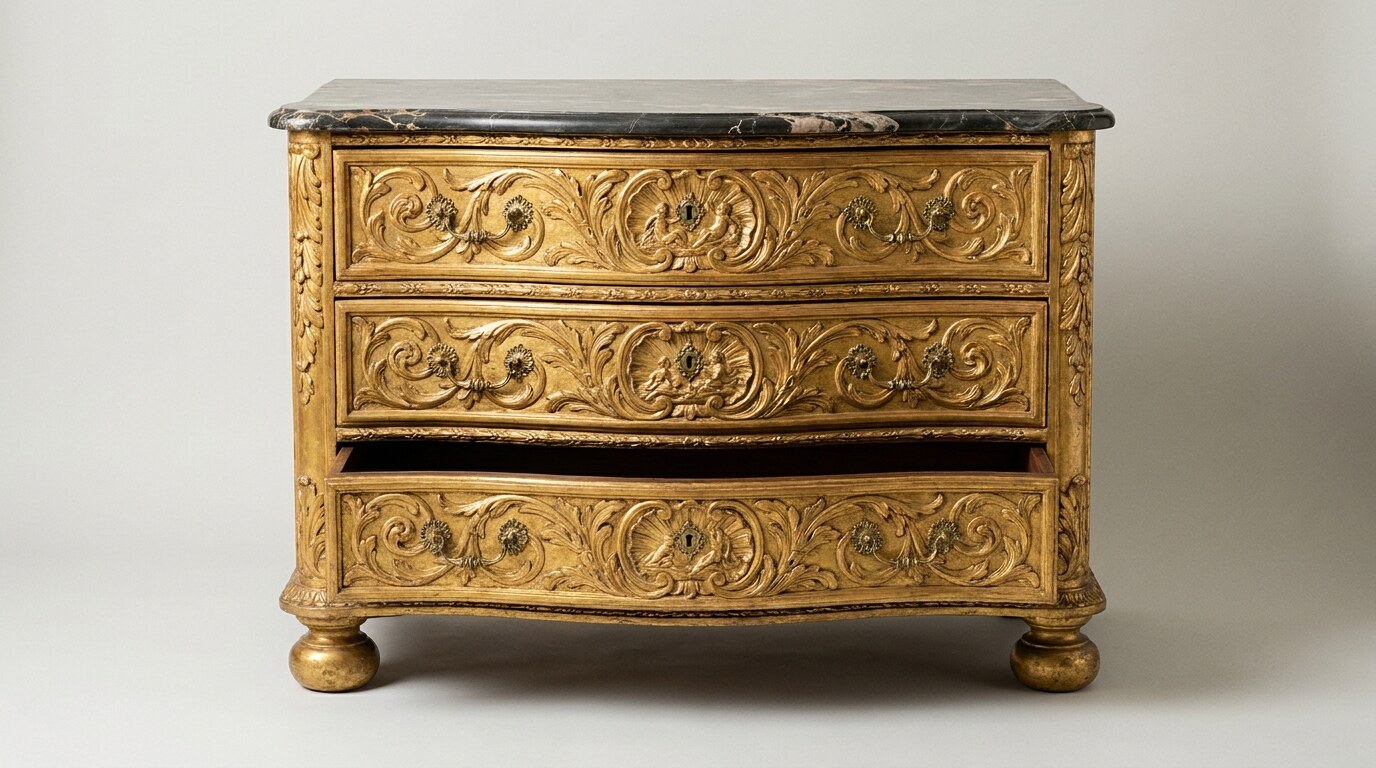
Genoese cassettoni (1700–1780) are identifiable by deep relief-carved giltwood fronts, often with serpentine plans. The Genoese workshops produced fewer cassettoni in absolute numbers than Venice or Rome, with current scholarship counting fewer than 200 surviving documented Genoese pieces; the form was used in formal palace antechambers along the Strada Nuova, and the Musei di Strada Nuova (Palazzo Bianco, Palazzo Rosso, Palazzo Tursi) display approximately 40 examples in the original architectural settings. Carving vocabulary includes lions' masks, acanthus volutes, and sea-shell cartouches, all in carved giltwood applied to walnut or fir carcasses.
Venetian lacca technique and palette
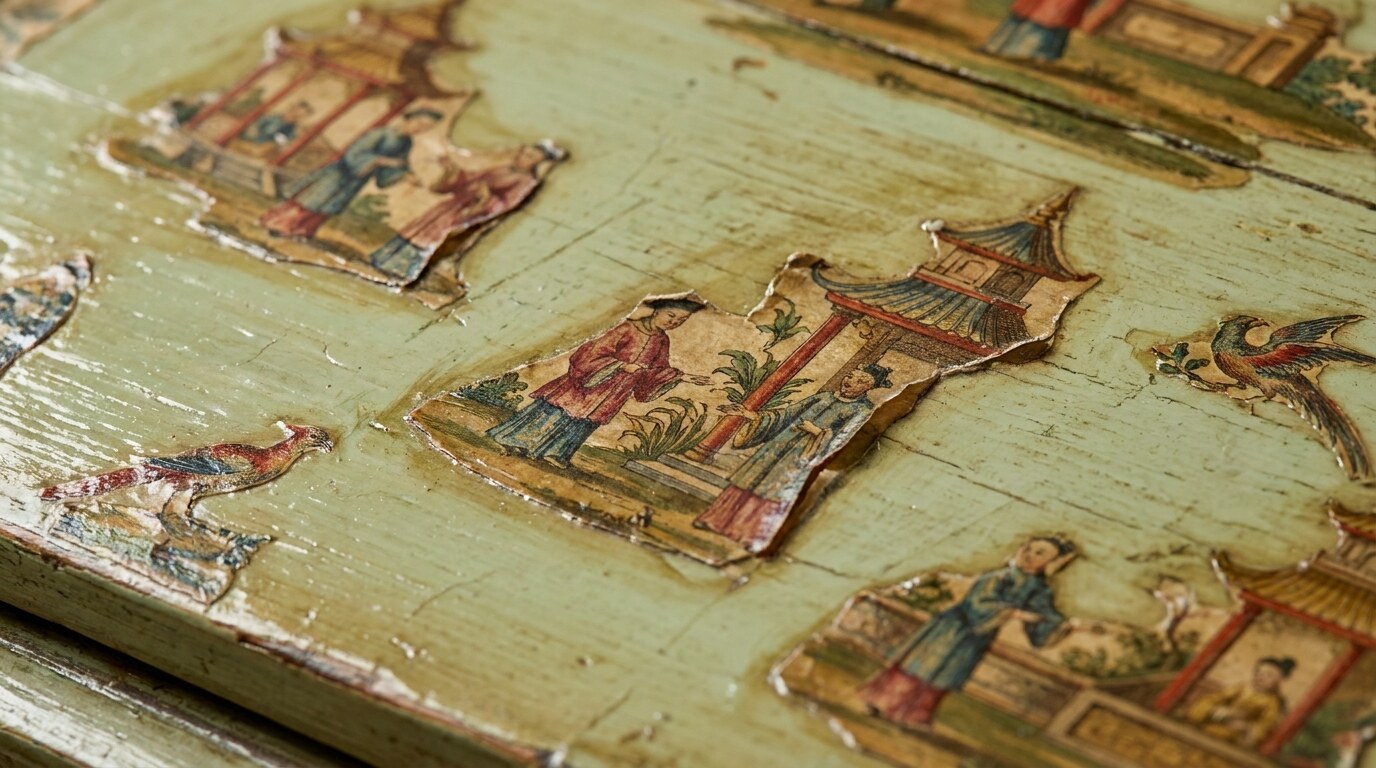
The Venetian school developed two distinct decorative techniques. Lacca veneziana uses oil-and-resin varnishes applied over chalk-and-glue grounds with painted polychrome decoration in chinoiserie, pastoral, or rocaille schemes; lacca povera uses printed paper cut-outs adhered with size and varnished over to imitate full hand-painting at lower production cost, in distinction from true Eastern lacquer (urushi) or Western japanning. Palette typically combines pale celadon green, dusty pink, and ivory grounds with polychrome figures and gilded mouldings. Forms are bombé (swelling outward at the front and sides), with cabriole legs.
Roman classicising idiom
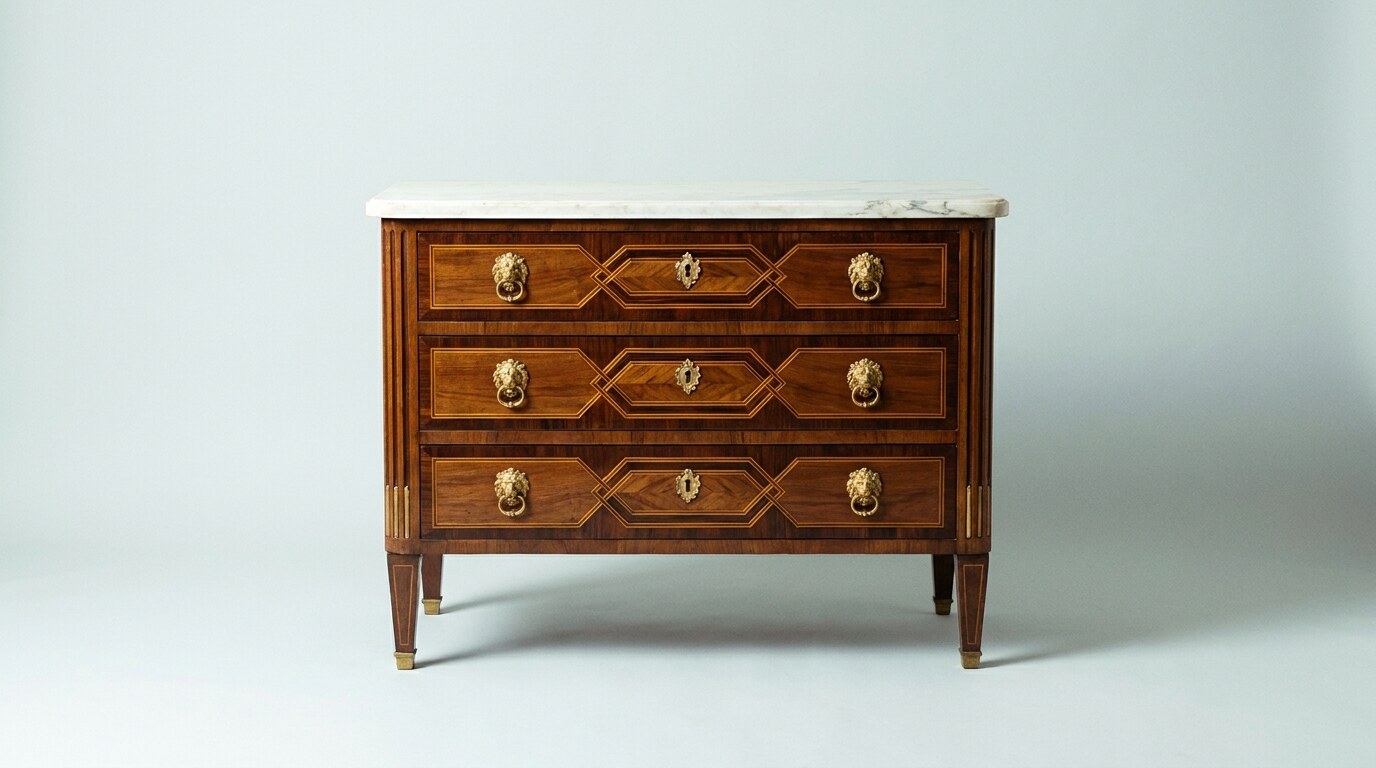
The Roman school produced the most architecturally restrained cassettoni. Roman pieces from 1750 to 1820 carry rectilinear silhouettes, walnut and rosewood veneers with geometric or strapwork marquetry, and gilt-bronze mounts in restrained classical motifs. The Roman idiom was led by named cabinet-makers including Giovanni Volpi (active 1770–1810) and reflected the academic taste of the Vatican court. Surviving Roman cassettoni are catalogued in the Galleria Borghese (Villa Borghese), the Museo Napoleonico (Palazzo Primoli), and the Quirinale (Palazzo del Quirinale, on rotating public visiting schedules).
Authentication of period vs 19th-century revival
Three authentication tests apply to Italian cassettoni offered as period. The first is dovetail construction: hand-cut dovetails of irregular pin spacing indicate period work, machine-cut dovetails of uniform spacing indicate 1880-onward production. The second is secondary timber: period Venetian work uses pine or fir; period Genoese uses fir with walnut framing; period Roman uses walnut secondary work. Pieces with mahogany or oak secondary timbers are typically 19th-century revivals. The third is paint and lacquer history: period lacca povera shows visible printed-paper edges under raking light or magnification, with paper aging to a brown tone; modern reproductions paint the figures rather than applying paper cut-outs.
Buying in 2026
Three Italian dealers and one auction house concentrate the trade in 2026. Galleria Cesati (founded 1986, Milan) carries Genoese and Venetian pieces with documented provenance. Antichità Boralevi (founded 1969, Florence) specialises in Tuscan and Roman cassettoni. Wannenes Genoa holds the principal Italian-furniture auction calendar, with Liguria-focussed sales typically held in spring and autumn. The Wannenes Genoa spring 2025 sale recorded a serpentine-fronted Genoese giltwood cassettone, c. 1740, sold at €88,000 against a pre-sale estimate of €40,000 to €60,000, the highest Genoese cassettone result at the house since 2018.
The forward research question for this journal is the unpublished provincial Italian cassettoni produced in Piedmont, Lombardy, and the Marche between 1750 and 1810, of which the Galleria Sabauda holds a study collection of approximately 90 pieces but published catalogue entries cover fewer than 30.
References and further reading
- Musei di Strada Nuova, Genoa.
- Museo Correr, Venice.
- Galleria Sabauda, Turin.
- Wannenes, Genoa.
- Victoria and Albert Museum, Italian furniture collection.