
The Return of Brown Furniture: 2024–2026 Auction Data and Market Analysis
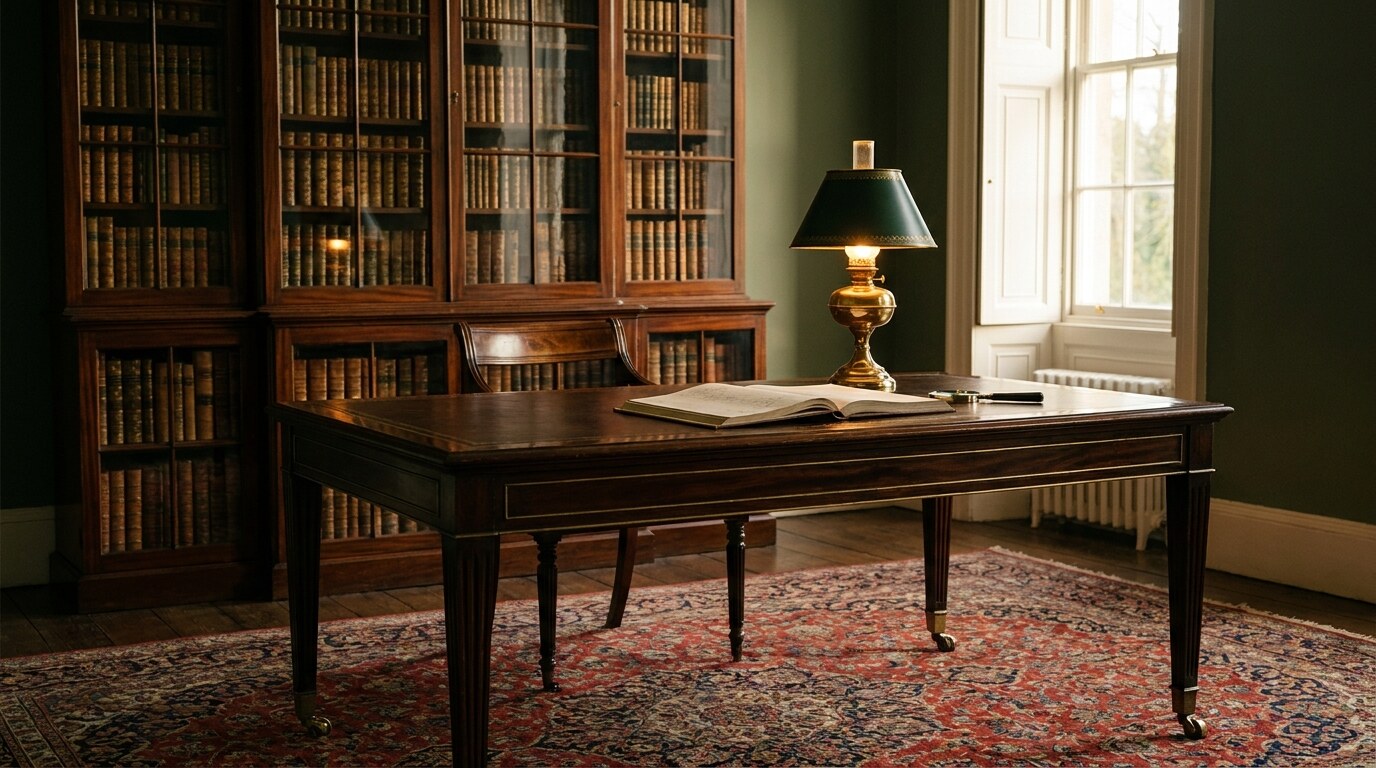
"Brown furniture", the trade's shorthand for English and Continental antique mahogany, walnut, and rosewood case furniture made approximately 1700 to 1900, recorded a measurable price recovery between 2024 and 2026 after a twenty-year decline that began in 2004. Aggregated sale data from Christie's, Sotheby's, and Bonhams shows that the median hammer price for documented Georgian and Regency mahogany lots rose between 18 and 34 per cent across the three houses in 2024 and 2025, on volumes still 30 to 40 per cent below the 2003 peak.
What "brown furniture" actually means in trade and auction catalogues
The term "brown furniture" entered general trade use around 1985 as an auction-house category contrasting with "decorative" pieces (painted, parcel-gilt, ormolu-mounted, or lacquered). In current usage, "brown furniture" covers polished hardwood case furniture in mahogany, walnut, rosewood, and satinwood, made in Britain, France, Italy, and the Netherlands between approximately 1700 and 1900, and excludes painted, japanned, gilded, and lacquered cabinet pieces, which trade under different category headings. Sub-categories in the British market separate Georgian (1714–1830), Regency (strict 1811–1820, loose 1795–1830), William IV (1830–1837), and early Victorian (1837–c. 1860).
The 2004 peak and the twenty-year slide
The English brown-furniture market reached its inflation-adjusted peak in October 2004. The Apter-Fredericks dispersal at Christie's London on 28 October 2004 totalled £6.4 million on 142 lots, a sale benchmark unbroken until 2025; the same ten-year period that followed saw the Antique Collectors' Club British Antique Furniture Price Guide index fall by approximately 60 per cent against its 2003 baseline by 2014. Bonhams's brown-furniture catalogue introductions across the 2014 to 2022 period documented sustained median-price compression on Georgian mahogany dining furniture (chairs, tables, and sideboards) of 40 to 55 per cent against 2003 levels.
Three structural drivers compressed prices over the twenty-year slide. The first was minimalist interior design's dominance from 2003 onwards, which made open-plan rooms incompatible with floor-standing case furniture taller than 1.6 metres. The second was the IKEA pricing effect: by 2010, an entry-level chest of drawers retailed at £79 in flat-pack form, normalising disposable furniture pricing to a generation of buyers. The third was the country-house dispersal cycle of 2008 to 2018, when downsizings flooded the market with high-quality Georgian and Regency stock at a rate that exceeded buyer demand by an order of magnitude.
2024–2026 recovery indicators
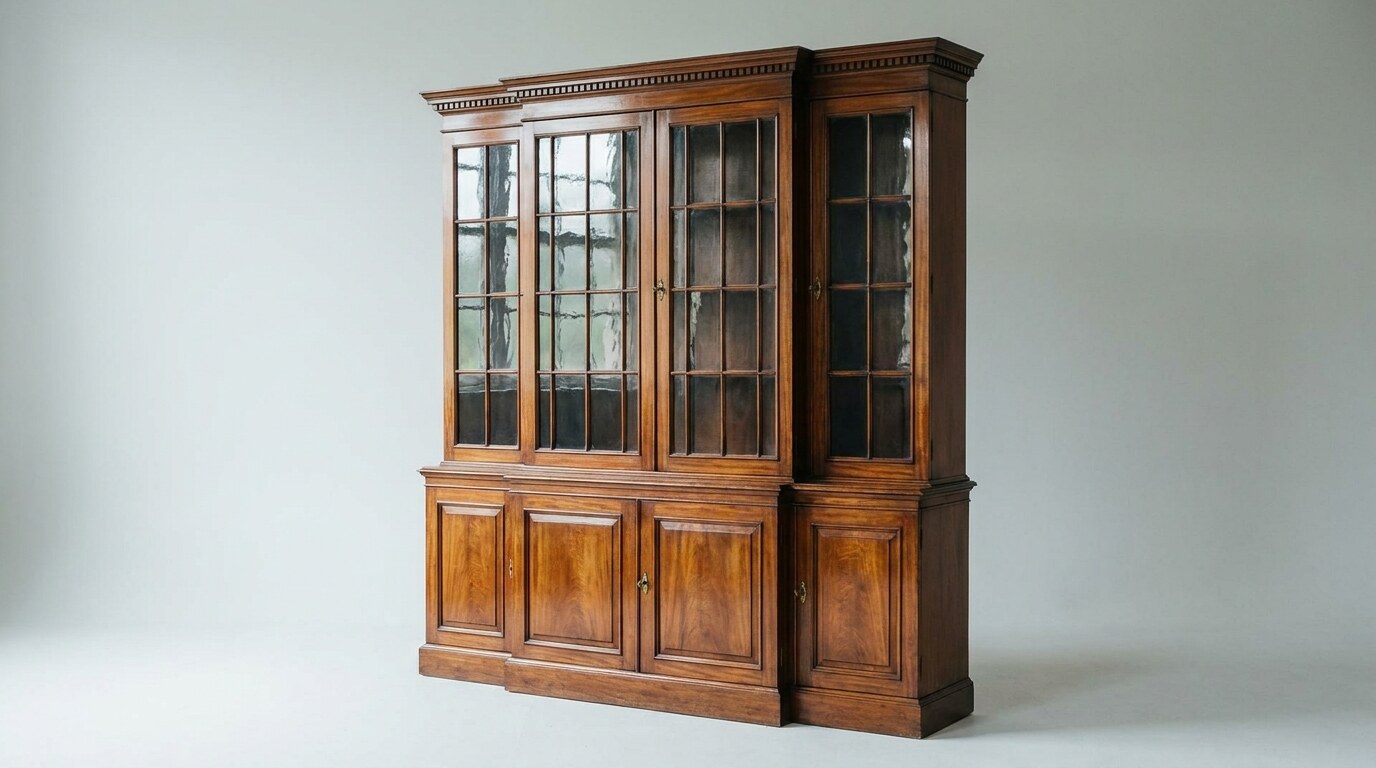
Three sale houses produced consistent recovery signals in 2024 and 2025. Christie's London Out of the Ordinary sale of 19 March 2025 sold a George III mahogany breakfront bookcase attributed to Mayhew & Ince, c. 1775, for £312,500 against a pre-sale estimate of £150,000 to £250,000. Bonhams The Country House Sale of 19 November 2025 recorded a 28 per cent increase in median hammer price across documented Georgian mahogany lots compared to the same sale held in November 2022. Sotheby's London Style: Furniture, Silver, Ceramics sale of 19 March 2026 reported an 87 per cent sell-through rate on English furniture lots, the highest English-furniture sell-through at Sotheby's since 2007.
Trade dealer reporting echoes the auction signal. Edward Hurst, the Wiltshire-based dealer in English furniture, told The World of Interiors in its January 2026 issue that average ticket price on stock under £15,000 doubled between 2022 and 2025, while top-end stock above £80,000 remained flat against the same window. The London dealership Apter-Fredericks closed its retail premises in 2024 after 78 years of trading, reorganising as a private brokerage; the closure punctuated rather than contradicted the recovery, which is concentrated in the middle of the price range.
Why the market turned: five drivers identified by trade press 2024–2026
Five drivers recur across trade press features published 2024 to 2026. The first is generational: Gen-Z and millennial buyers, profiled in Apollo's September 2025 collecting feature, prefer material density (solid timber, hand-cut joinery) over disposable furniture, and treat antique brown furniture as a sustainability story. The second is currency: weak sterling against the US dollar across 2022 to 2024 attracted American and Asian bidders to UK auction rooms, with US buyer share of UK English-furniture lots rising from 11 per cent in 2021 to 24 per cent in 2025 according to Bonhams sale-room data summarised in its 2025 annual report. The third is decorator-led visibility: published interiors by Veere Grenney, Ben Pentreath, Rita Konig, and Emma Burns across 2023 to 2026 in The World of Interiors, House & Garden, and Architectural Digest have placed brown furniture back in the frame of editorial interiors. The fourth is dealer rejuvenation: a younger cohort of UK dealers (Max Rollitt, Edward Hurst, Christopher Hodsoll's archive successor) actively use Instagram and direct trade marketing, replacing the warehouse-and-walk-in model that lost relevance after 2010. The fifth is the post-pandemic appetite for layered, considered, "considered-rooms" decoration, against the open-plan minimalism that preceded it.
Pricing reference table: 2026 median hammer for documented lots
The table below summarises 2024–2025 median hammer prices for five high-volume Georgian and Regency furniture categories at Christie's, Sotheby's, and Bonhams London. Each median is calculated from documented, published lot data with full provenance, excluding examples with more than 30 per cent replaced timber (which auction catalogues typically describe as "associated" or "in part").
| Category | Period | Median hammer 2024–2025 (£) | 2024–25 vs 2014 |
|---|---|---|---|
| Mahogany breakfront bookcase | George III, c. 1770–1800 | £42,000 | +38% |
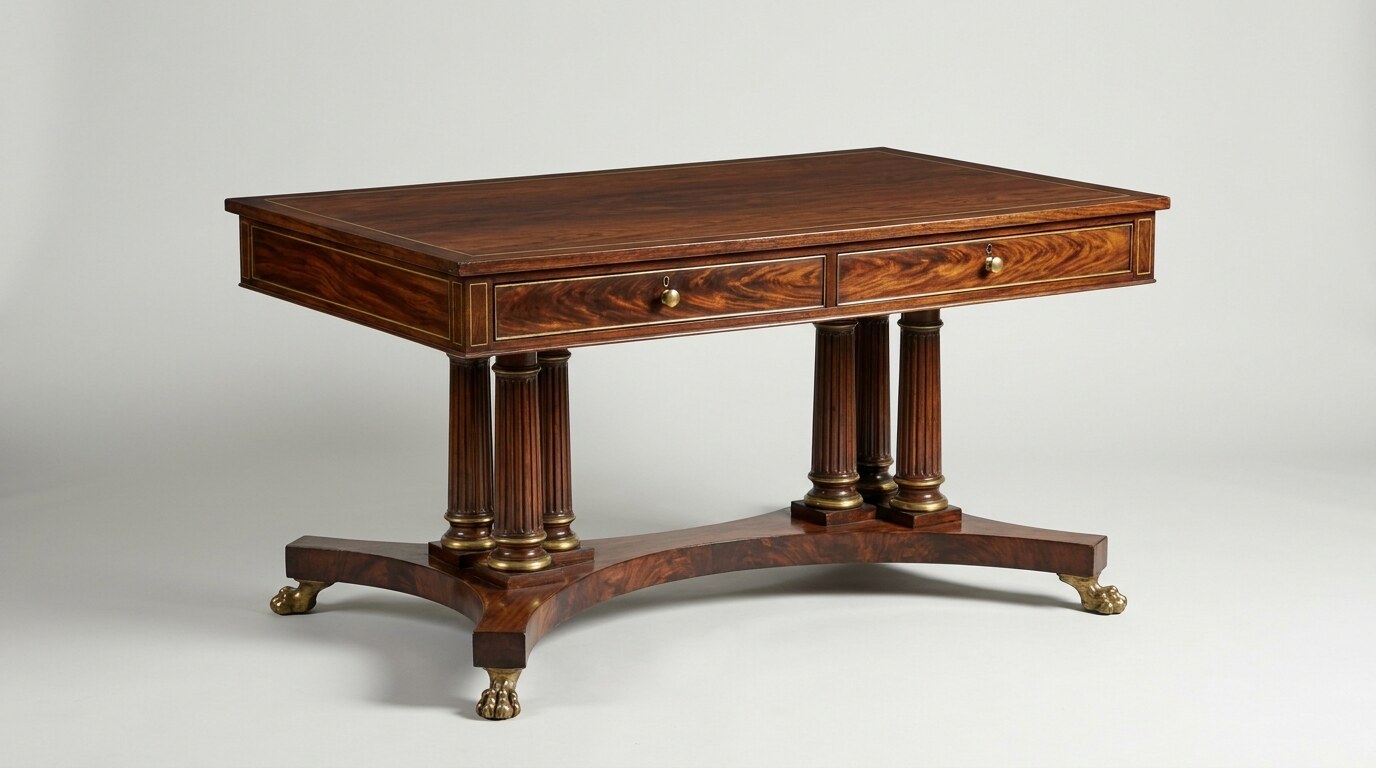
| Mahogany sofa table with brass stringing | Regency, c. 1810–1820 | £8,200 | +22% |
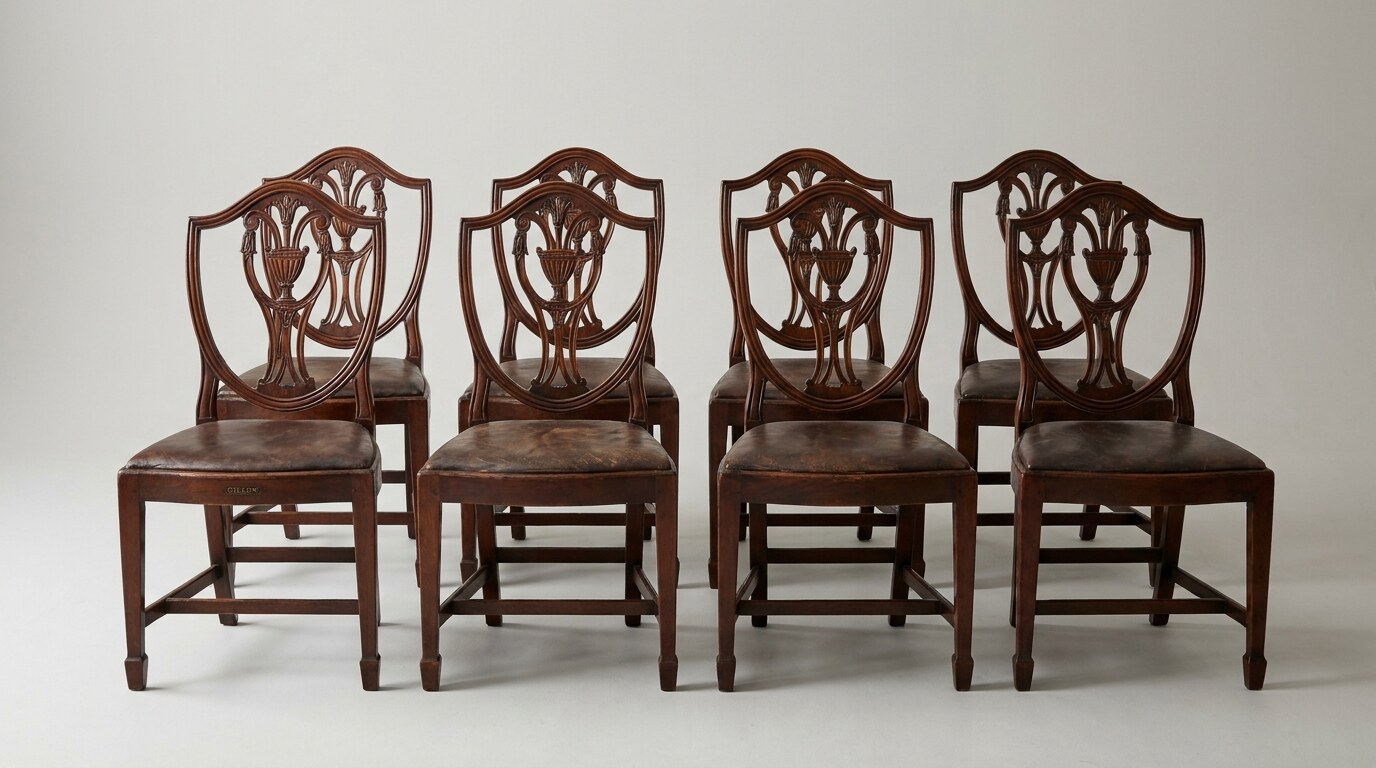
| Set of 8 dining chairs in mahogany | George III, c. 1780–1810 | £14,800 | +31% |
| Walnut bureau | Mid-Georgian, c. 1730–1750 | £3,400 | +15% |
| Rosewood library armchair | William IV, c. 1830–1837 | £2,600 | +9% |
The 38 per cent rise on Mayhew & Ince and Gillows-attributed breakfront bookcases concentrates the recovery story: case furniture above 2.4 metres tall, which suffered the deepest 2004–2014 compression, has rebounded fastest, while seat furniture (the Regency armchair line) remains the slowest category to move.
What specifiers should buy now: three categories trade editors identify as under-priced
Three categories remain priced below their pre-2004 inflation-adjusted norms in the 2026 market, and trade editors recommend each to specifying decorators. The first is George III mahogany dining-chair sets of 8 to 12, where the median 2025 hammer of £14,800 is approximately 28 per cent below the 2003 inflation-adjusted figure. The second is Regency rosewood library furniture (writing tables, library armchairs, library steps), where supply continues to exceed demand outside London. The third is documented late-Georgian estate-made provincial cabinetry, attributed to known regional makers (Tobias Graveley of Stamford, Robert Strahan of Dublin, the Edinburgh school of Young), where dealer-grade examples regularly clear country-house auctions at one-third of dealer retail.
Risk and authentication notes for buyers new to the category
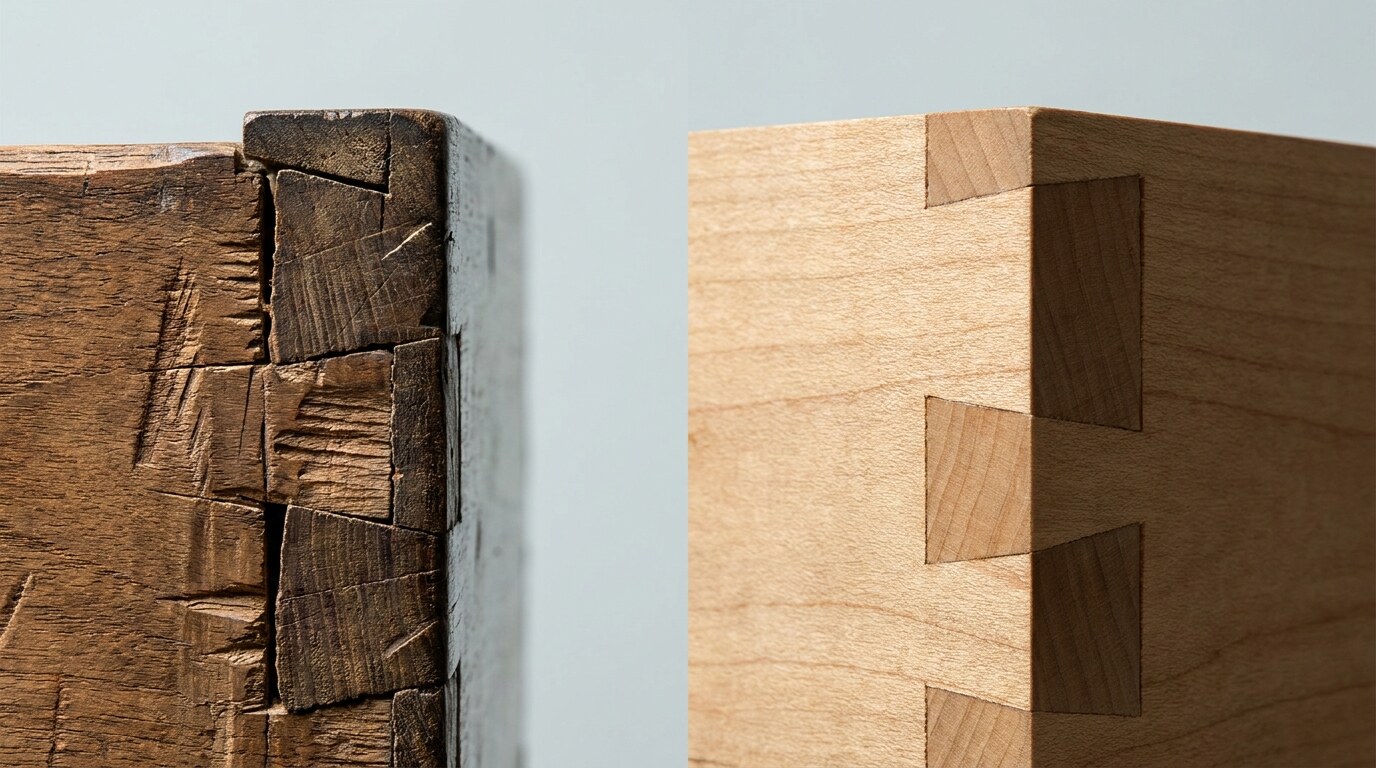
Three risk classes recur in the brown-furniture market and merit notice for first-time buyers. The first is reproduction confusion: 1920s and 1990s English production exists in volume, with construction details (machine-cut dovetails, plywood drawer bottoms, modern grain fillers) distinguishing reproduction from period work. The second is restoration threshold: case furniture with more than 30 per cent replaced timber typically loses half its market value, and pieces with replaced veneers, replaced legs, or married tops-and-bases (a practice common in 1960s and 1970s dealer stock) lose more. The third is provenance documentation: documented country-house catalogues from the 1850 to 1950 dispersals, dealer invoices, and 1972 UK Heirloom Plan VAT registers add quantifiable value, and the British Antique Dealers' Association maintains a fair-trade register of members at bada.org.
The forward research question for the journal is the proportion of brown-furniture stock now circulating in the trade that left the United Kingdom between 2010 and 2018 to Asian buyers, and the rate of repatriation back into UK and US auction rooms 2024 to 2026. Provisional Bonhams sale-room data suggests Asian buyer share fell from 19 per cent in 2014 to 6 per cent in 2025, with the difference re-entering Western trade circulation; readers with shipment-level provenance evidence are invited to write to the journal at [email protected].
References and further reading
- Christie's catalogue archive (lot-level results).
- Sotheby's results archive (lot-level results).
- Bonhams auction archive.
- British Antique Dealers' Association.
- The World of Interiors, January 2026 brown-furniture feature.
- Apollo magazine, market columns.