
Albert Hadley and Mark Hampton: American Decorating's Grand Tradition
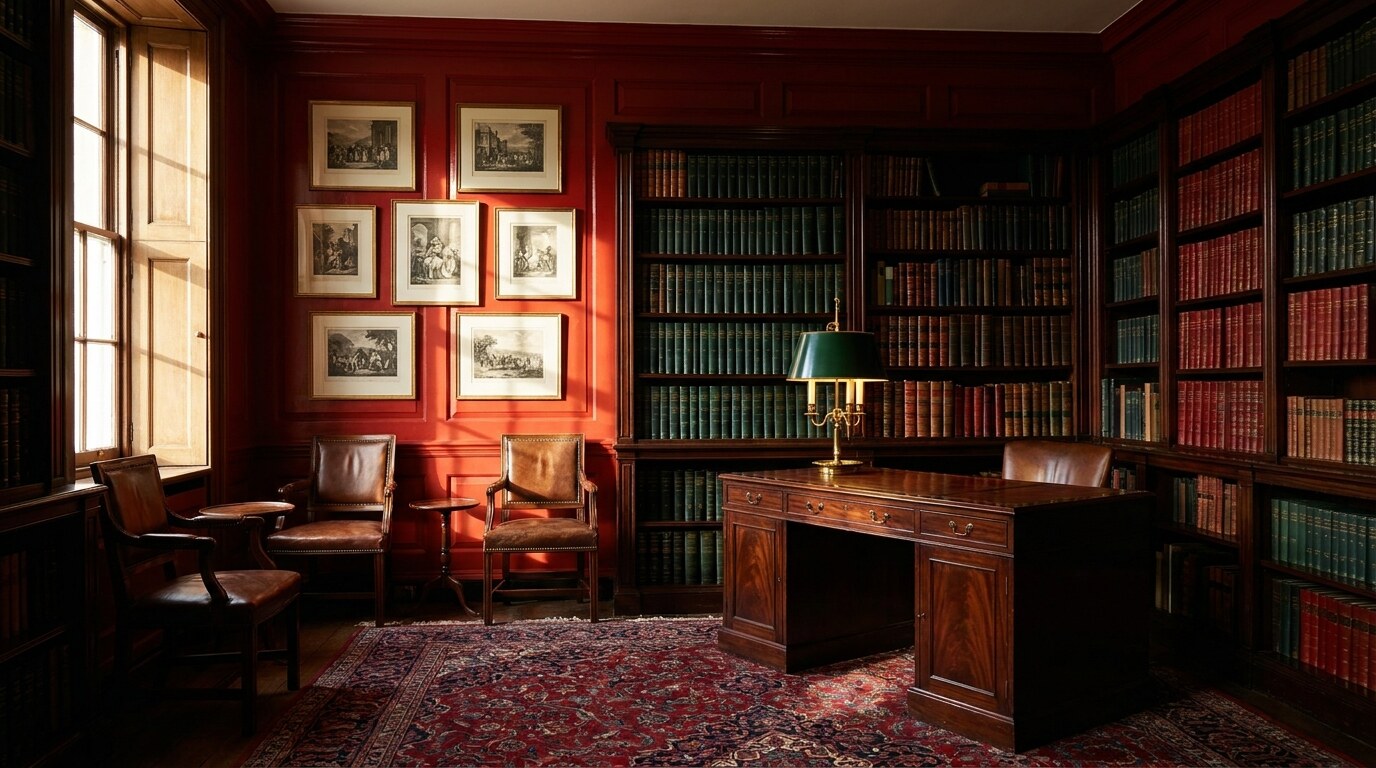
Albert Hadley (1920–2012) and Mark Hampton (1940–1998) defined the late-20th-century American grand decorating tradition through Parish-Hadley Associates (founded 1962) and Mark Hampton LLC (founded 1976) respectively. Their commissions covered private residences for the Astor, Whitney, Mellon, Ford, and Rockefeller families and public commissions including the White House Family Quarters under Presidents Carter, Reagan, Bush, and Clinton. The drawn archives of both decorators are now publicly held at the Cooper Hewitt (Hadley) and the New-York Historical Society (Hampton).
Hadley's training under Eleanor Brown of McMillen
Albert Hadley trained at the Parsons School of Design (graduated 1949) and joined McMillen Inc., the New York decorating firm founded 1924 by Eleanor Brown, in 1956. McMillen was the first American decorating firm to employ professionally trained, formally credentialled decorators rather than self-taught practitioners, and Hadley acquired Brown's discipline of measured drawing, scale models, and project documentation that became his signature method at Parish-Hadley.
Sister Parish + Hadley partnership 1962 to 1996
Parish-Hadley Associates was founded in 1962 by Sister Parish (Dorothy May Kinnicutt Parish, 1910–1994) and Albert Hadley, with offices at 305 East 63rd Street, New York; the firm operated for 34 years until Sister Parish's death in 1994 and Hadley's continued sole practice closed in 1996. The partnership combined Parish's instinctive layered English-country idiom with Hadley's training-derived discipline of plan-drawing and decorative-arts scholarship; the resulting interiors were photographed extensively in Architectural Digest, House & Garden, and Town & Country.
Hampton's training under David Hicks and Mrs Henry Parish
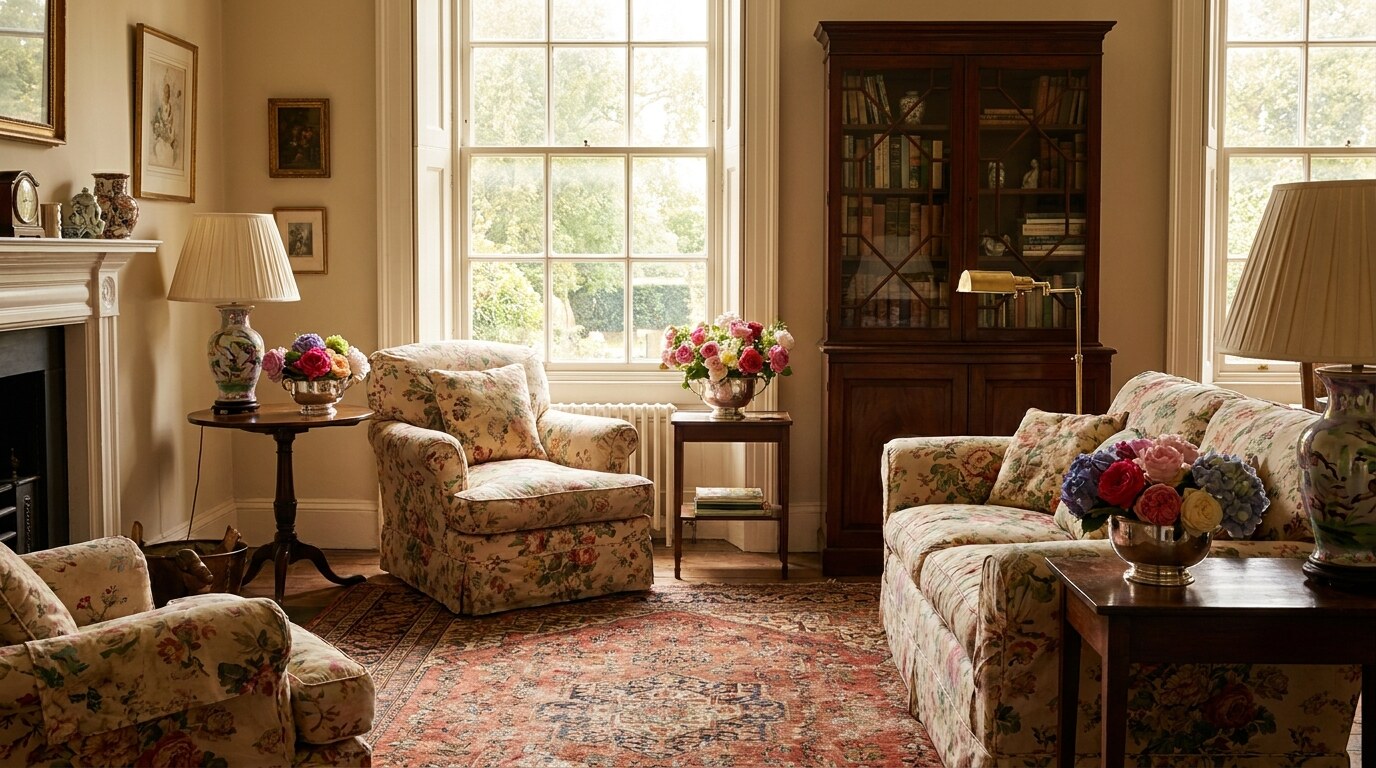
Mark Hampton trained briefly at the London School of Economics (1962–1963) before working for the British decorator David Hicks (1929–1998) on Mount Street commissions during 1965–1967. Hampton returned to New York and joined McMillen for a year, then Sister Parish's pre-Parish-Hadley practice for two years, before founding Mark Hampton LLC in 1976 at 654 Madison Avenue. Hicks's geometric pattern discipline and Parish's English country accumulation both visible in Hampton's later work.
Five hallmark Hampton interiors
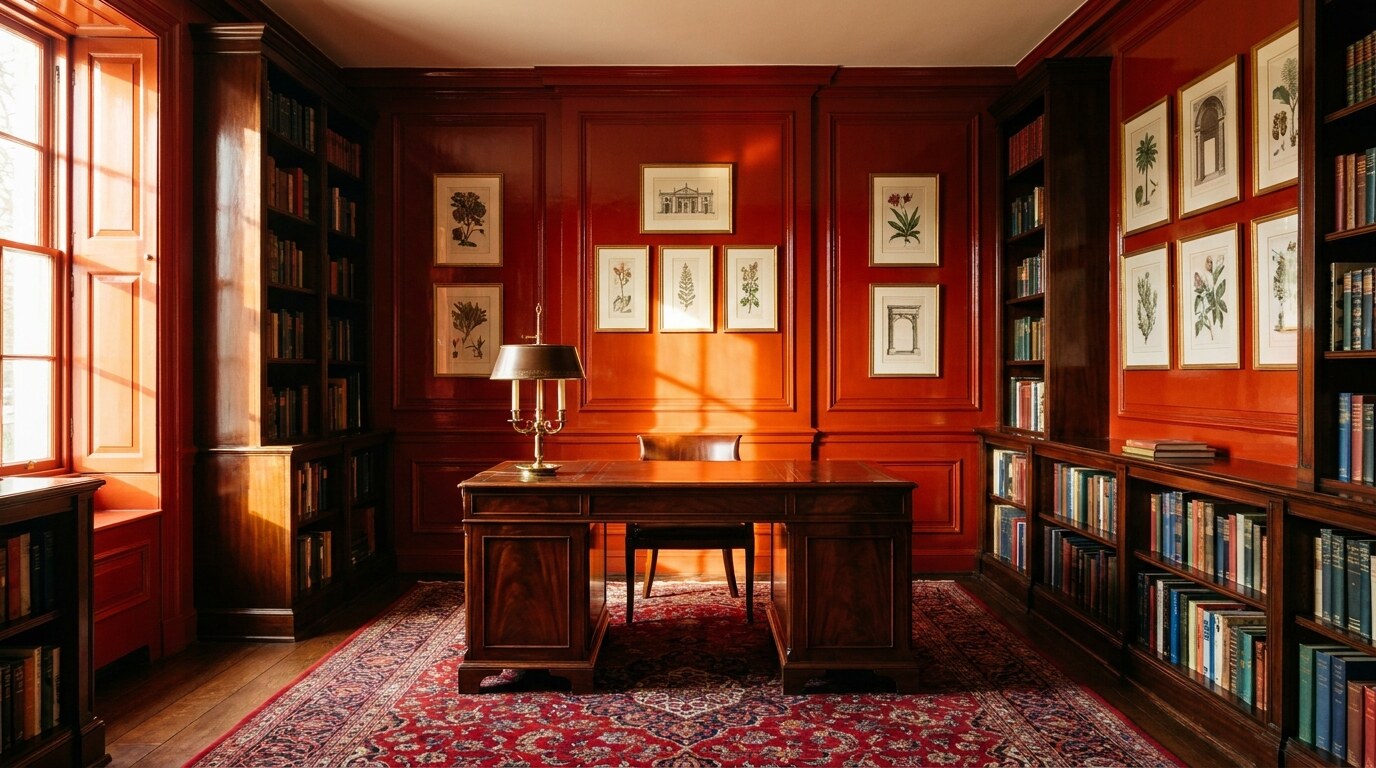
Five Mark Hampton commissions define his published canon. The Carter Family quarters at the White House (1979) introduced Hampton to political-residence work. The Bloomingdale residence at 770 Park Avenue (1982) presented his red-lacquered library now widely reproduced as a model. The Estée Lauder Manhattan town house (1985) carried complete Mark Hampton furniture and fabric integration. The First Family Quarters at the White House under President George H.W. Bush (1989–1993) was Hampton's most public commission. The Estée Lauder Hamptons house (1992) extended his country-house work into coastal New England.
White House work 1980 to 2000
Mark Hampton was personally selected by First Lady Barbara Bush in 1989 to redecorate the White House Family Quarters and continued advising the executive residence through the Clinton administration; Albert Hadley advised the Carter and Reagan family quarters during 1979 to 1985. Both decorators worked under the supervision of the White House Curator's Office and within the Treasure of the United States budget protocols, with all furniture and material selections approved by the Committee for the Preservation of the White House.
Influence on the next generation
Five contemporary American decorators name Hadley or Hampton as a primary influence in published interviews 2015 to 2026. Bunny Williams (founded 1988) trained at Parish-Hadley from 1971 to 1988. David Easton (founded 1972) cites Hadley's drawing discipline as foundational. Miles Redd (founded 1998) cites Hadley as the model for layered American maximalism. Bilhuber Inc. (Jeffrey Bilhuber, founded 1984) cites Hampton as the model for restrained coloured interiors. Studio Robert Stilin (founded 2003) cites both as influences in published interview material.
Archive locations
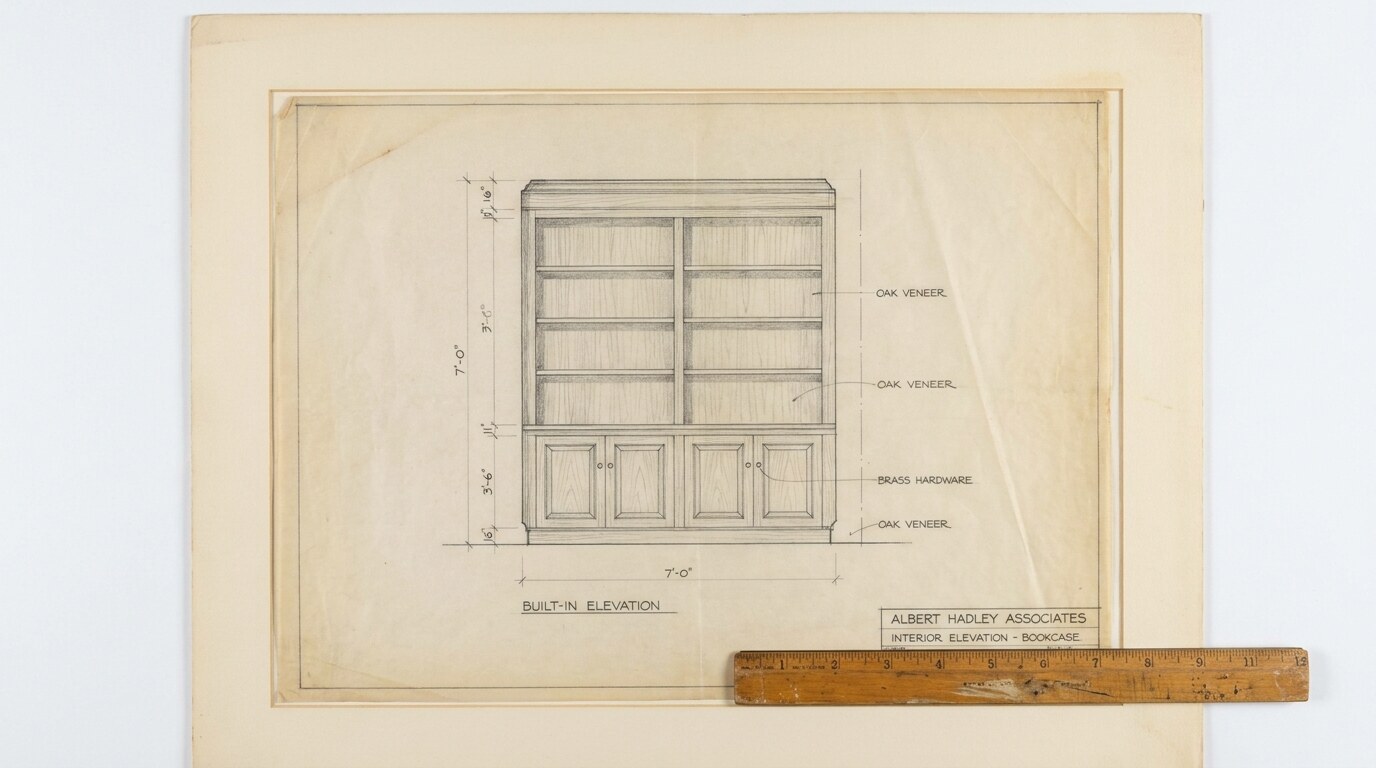
Albert Hadley's drawn archive of approximately 4,000 sheets was acquired by the Cooper Hewitt, Smithsonian Design Museum, in 2008 (accession numbers 2008-19-1 to 2008-19-3957) and is partially digitised on the Cooper Hewitt online catalogue. Mark Hampton's papers (drawings, fabric samples, project ledgers, and correspondence) are at the New-York Historical Society, where the Mark Hampton Collection holds approximately 12 linear feet of material covering 1976 to 1998.
The forward research question for this journal is the systematic comparison of British and American 20th-century classical decorating practice, of which a single doctoral thesis (Yale 2017, unpublished) addresses fragmentary aspects but a broader scholarly study has not been undertaken.
References and further reading
- Cooper Hewitt, Hadley archive.
- New-York Historical Society, Mark Hampton papers.
- Architectural Digest.
- White House Historical Association.
- Parsons School of Design.