
Brass Hardware and Door Furniture: Patinas, Finishes, Manufacturers
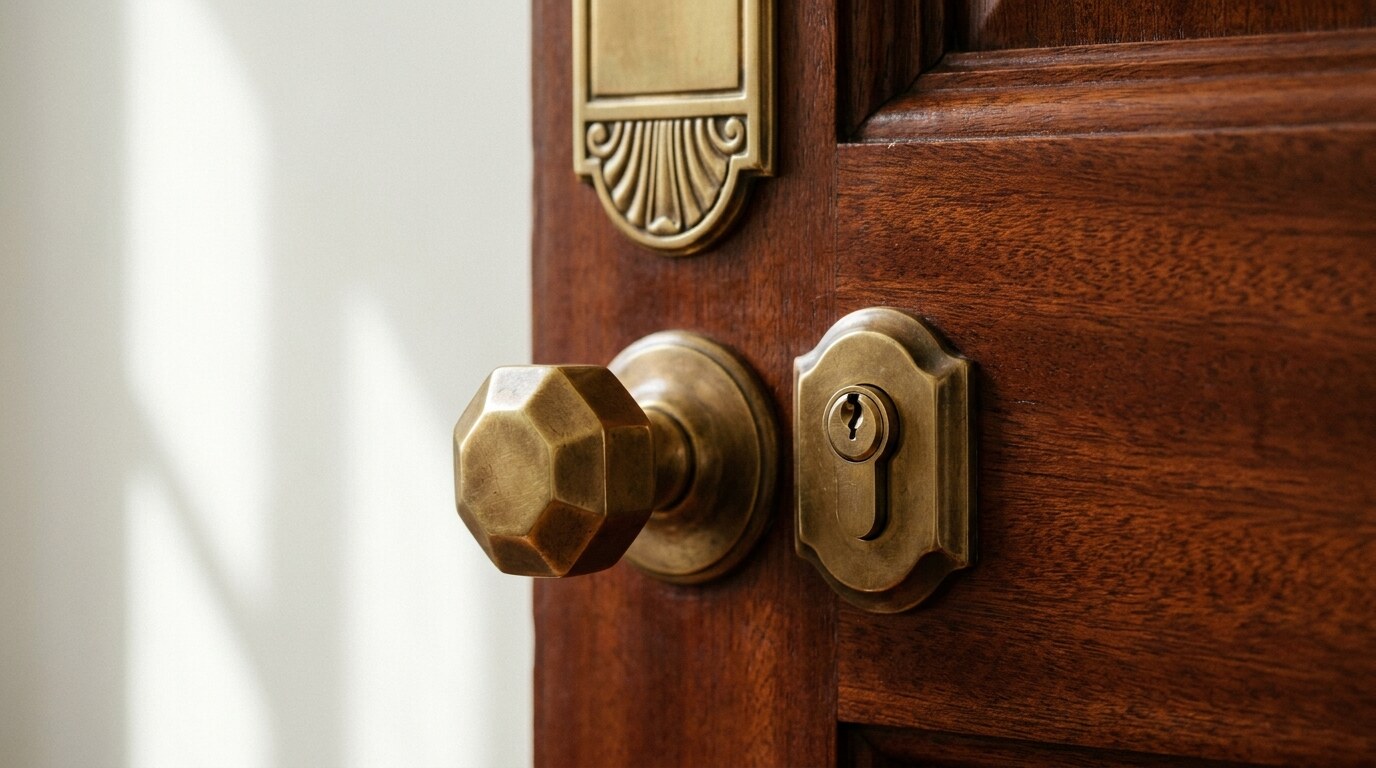
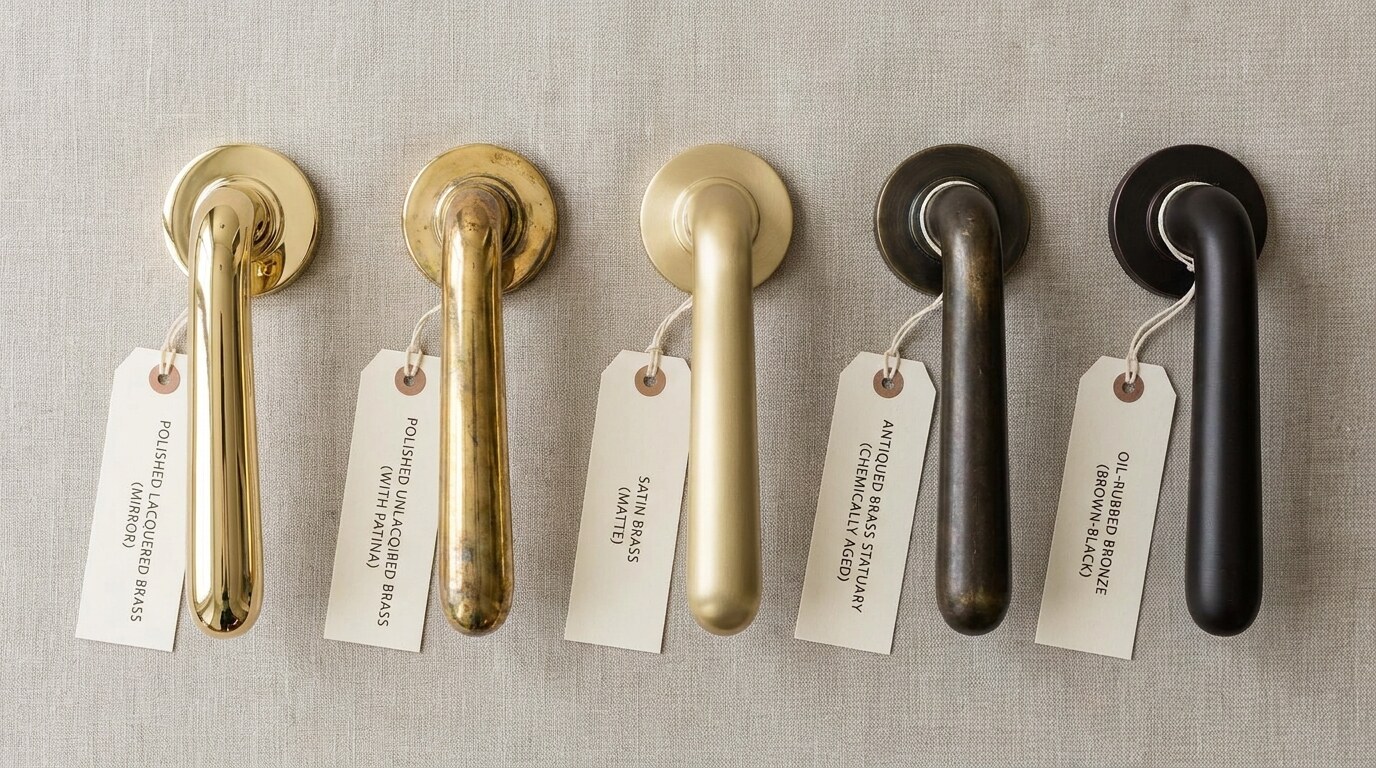
Classical-interior brass hardware (door knobs, escutcheons, finger plates, hinges, window stays, sash lifts, casement fasteners) is sourced today from a short list of British, French, and Italian foundries including Joseph Giles (Birmingham, founded 1933), Frank Allart (London, 1958), Olivari (Borgomanero, 1911), Bronzes de France (Paris, 1851), and Christopher Hyde (London, 1989). Finishes are specified as polished brass, satin brass, oil-rubbed bronze, antiqued brass (statuary), or living-finish unlacquered brass that ages with use.
The seven brass alloys used in hardware
Brass is an alloy of copper and zinc, with the ratio determining hardness, colour, and corrosion resistance. Seven alloys recur in classical hardware specification. CZ108 (CW508L), 64% copper / 35% zinc, is the standard cold-worked sheet brass for stamped escutcheons. CZ121 (CW614N), 58% copper / 39% zinc with 3% lead, is the principal hot-stamped and machined brass for cast door furniture. CZ132 is a higher-copper alloy used for decorative castings. CZ124 (Naval brass) adds 1% tin for corrosion resistance in coastal applications. Copper-rich alloys (CW508L, CW510L) produce warmer-toned brasses for high-end work. Each alloy carries a different aging colour as it patinates without lacquer.
Five finish specifications defined
| Finish | Surface | Patination |
|---|---|---|
| Polished lacquered brass | Mirror polish, applied lacquer | None (lacquer prevents) |
| Polished unlacquered brass | Mirror polish, no lacquer | Develops within 18–36 months |
| Satin brass | Brushed matte finish | Slow visible patination |
| Antiqued brass / statuary | Chemical-aged finish | Pre-aged at factory |
| Oil-rubbed bronze | Brown-black chemically aged | Continues to mellow |
Manufacturers compared
Olivari, founded 1911 in Borgomanero, Italy, holds an archive of more than 4,000 historic door-handle patterns and continues to produce designs by Gio Ponti, Carlo Scarpa, and Bruno Munari from original masters. Frank Allart, founded 1958 in London, supplies door and window hardware specified for Buckingham Palace, the Vatican apartments, 10 Downing Street, and major British and American luxury residential projects. Joseph Giles (founded 1933, Birmingham) covers a broader specifier range from architectural-trade through to high-end residential. Bronzes de France (founded 1851, Paris) supplies cast-bronze hardware to Mobilier National-supervised restorations.
Antique vs reproduction
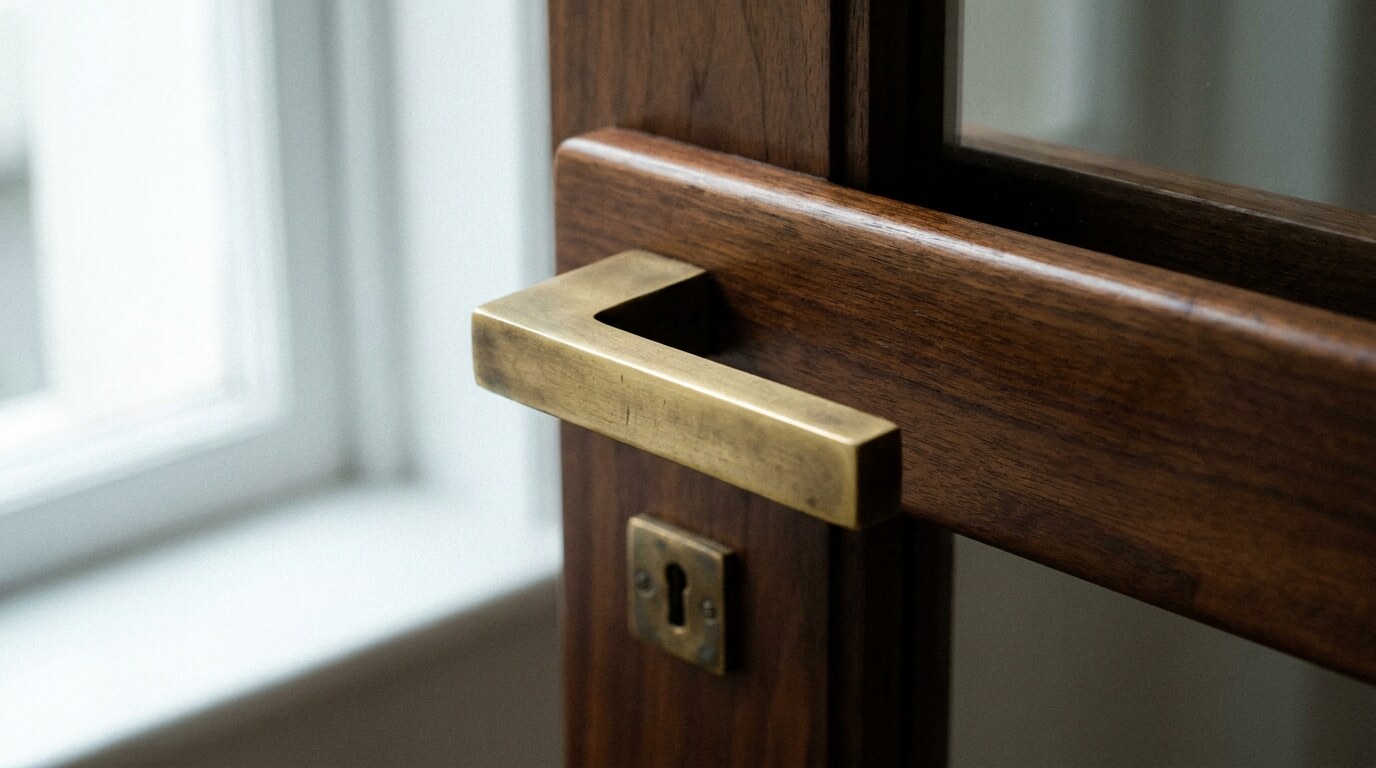
Three guidelines apply to deciding antique vs reproduction. Use antique hardware on listed buildings undergoing restoration, where reproduction loses points with conservation officers and may not match period mounting holes; UK suppliers Drummonds and Cox Architectural hold large reclaimed-hardware stock. Use reproduction on new build, where dimensional consistency across many doors matters more than provenance and reproduction hardware adapts to modern multi-point locks. Mix antique and reproduction within the same project carefully, mounting antique pieces on principal rooms and reproduction on service doors.
Lacquering decisions
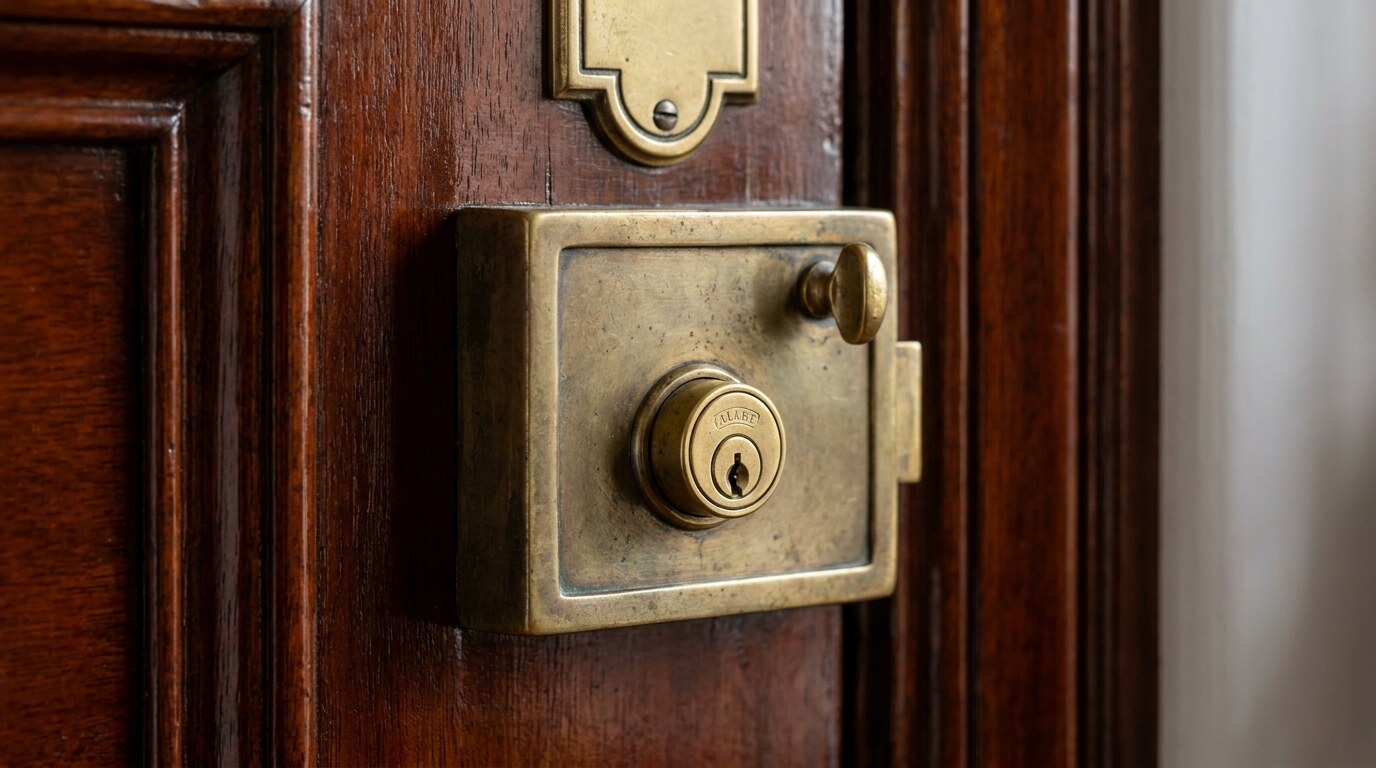
Three lacquering options apply to brass hardware. Factory lacquer (clear acrylic spray applied at the foundry) protects the polish for 5 to 12 years before failure shows as patchy darkening; once failed, lacquer must be chemically stripped and re-applied or removed entirely. Living finish (no lacquer at all) allows the brass to develop its own patina; unlacquered (living-finish) brass develops a stable patina after approximately 18 to 36 months of regular use, with the colour stabilising at a mid-warm honey tone that suits classical interiors better than mirror polish. Wax-only finish (a thin paste-wax barrier replacing lacquer) ages similarly to living finish but protects against fingerprint marking on heavily-used hardware.
Sourcing for restoration
Three UK and US specialists supply restoration-grade brass for listed-building work. Drummonds (London, founded 1988) carries reclaimed Georgian, Regency, and Victorian door hardware sourced from country-house dispersals. Cox Architectural Antiques (Surrey, founded 1976) holds approximately 4,500 historic items in stock at any time. In the United States, E.R. Butler & Co. (founded 1990, New York) reproduces 18th- and 19th-century American hardware at high-craft standard from period masters.
The forward research question for this journal is the surviving 18th- and 19th-century brass-foundry pattern books in regional British archives, of which Birmingham Central Library holds approximately 80 documented examples but only 12 have been published in transcribed form.
References and further reading
- Frank Allart, London.
- Olivari, Borgomanero.
- Joseph Giles, Birmingham.
- Drummonds, London.
- Cox Architectural Antiques, Surrey.