
Beaux-Arts Architecture: École Curriculum and American Examples 1885–1925
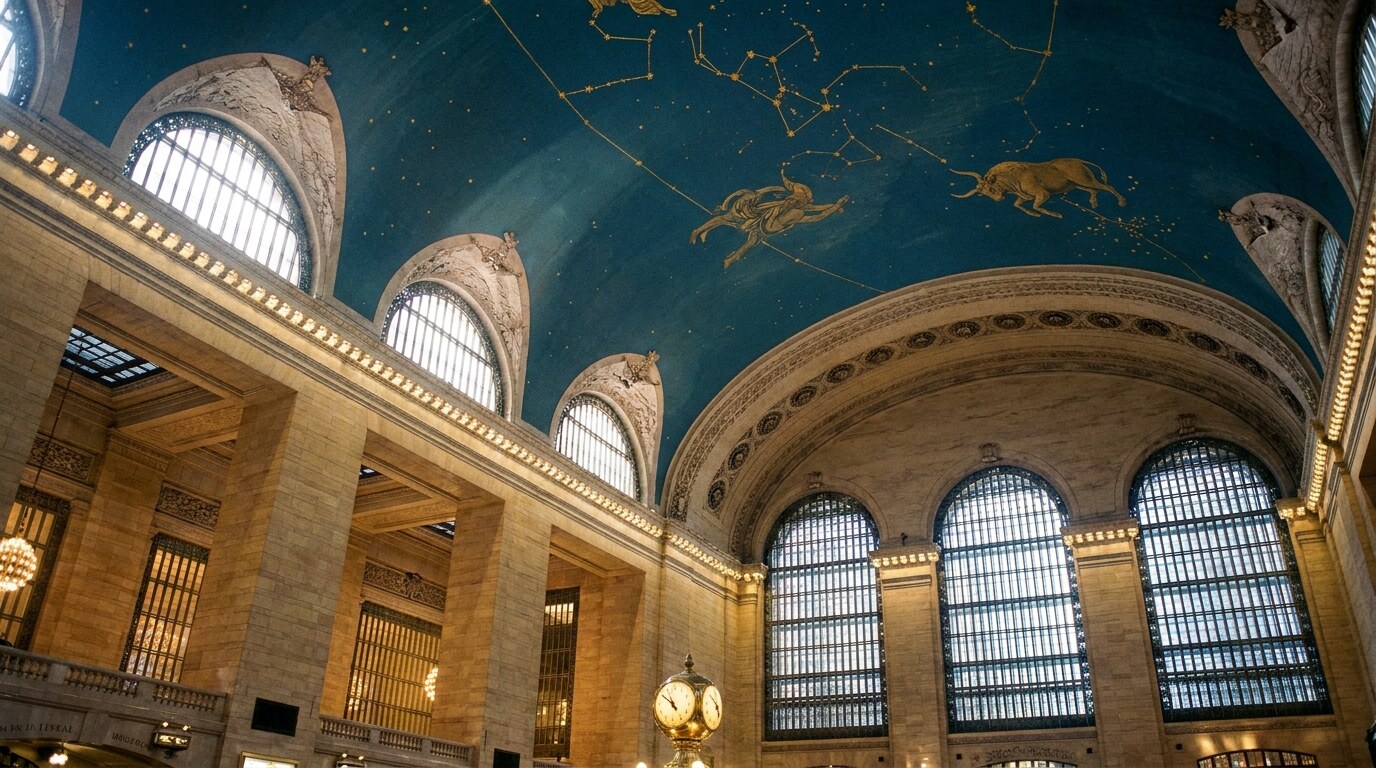
Beaux-Arts is the design idiom taught at the École des Beaux-Arts in Paris between 1819 and 1968, exported globally through American architects who trained there from 1846 to 1914 (including Richard Morris Hunt, Charles Follen McKim, and the partners of Carrère & Hastings), and applied in American public and private commissions 1885–1925 such as the New York Public Library (1897–1911), Grand Central Terminal (1903–1913), and the Henry Clay Frick House (1912–1914).
The École curriculum and its terms
The École des Beaux-Arts taught architecture as a competitive system of design exercises drawn from antique and Renaissance sources. Five terms recur in the curriculum and remain in trade use today. The parti is the architect's initial conceptual diagram, sketched at small scale in the first hours of an exercise, expressing the building's organising idea (axis, hierarchy, symmetry). The esquisse is the formal initial sketch competition entry submitted within 12 hours of the brief's release, binding the entrant to the parti they have chosen. The charrette (literally "cart") names both the cart that collected drawings on submission day and, by extension, the all-night design push before submission. The atelier is the studio under a senior architect's direction. The concours is the competition itself.
American architects who trained there 1846 to 1914
Richard Morris Hunt (1827–1895) was the first American admitted to the École des Beaux-Arts architecture section, in 1846; Charles Follen McKim (1847–1909) followed in 1867, Robert Swain Peabody in 1867, John Galen Howard in 1891, and Whitney Warren in 1894. Approximately 270 American architects studied at the École between 1846 and the curriculum's reform in 1968. The American Institute of Architects' published roster identifies 184 of them by name, with their École intake years and ateliers documented in the Smithsonian Archives of American Art.
Five canonical American Beaux-Arts buildings
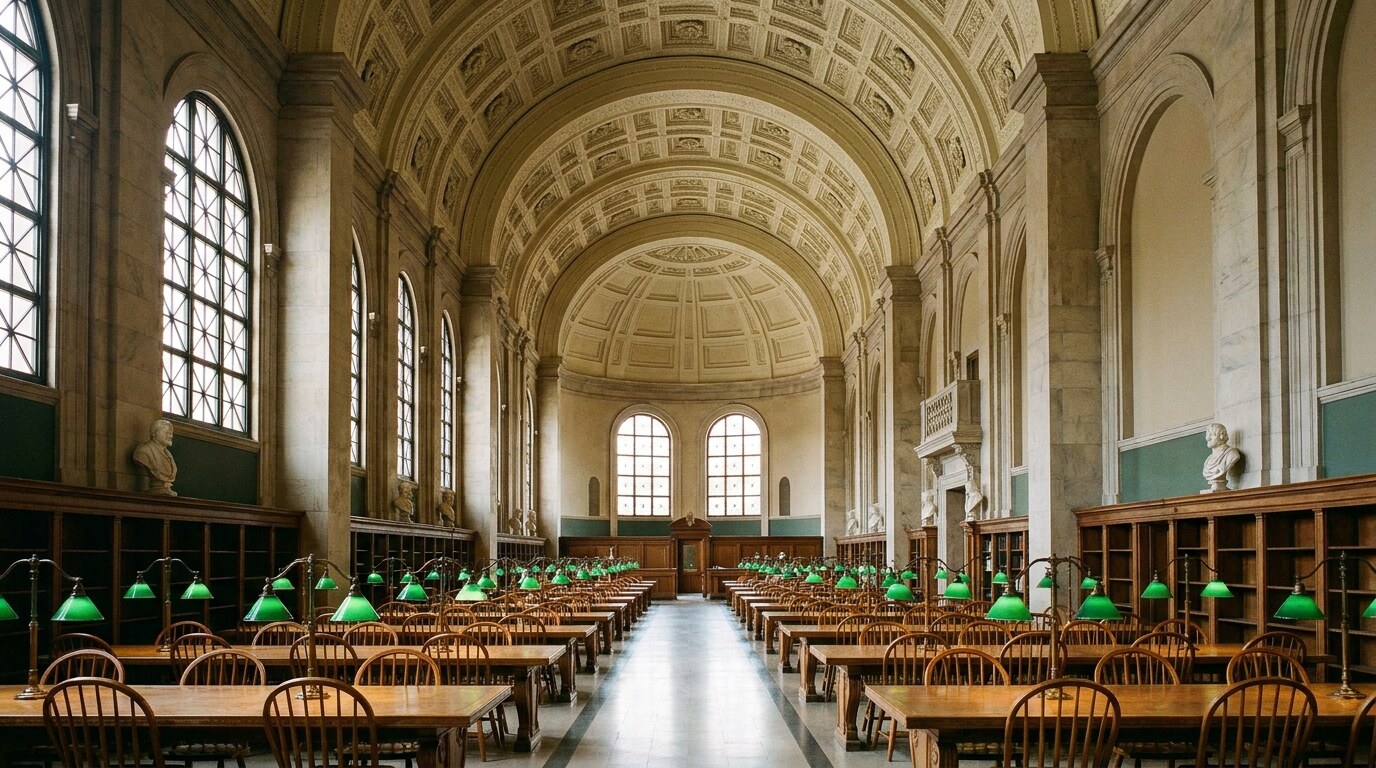
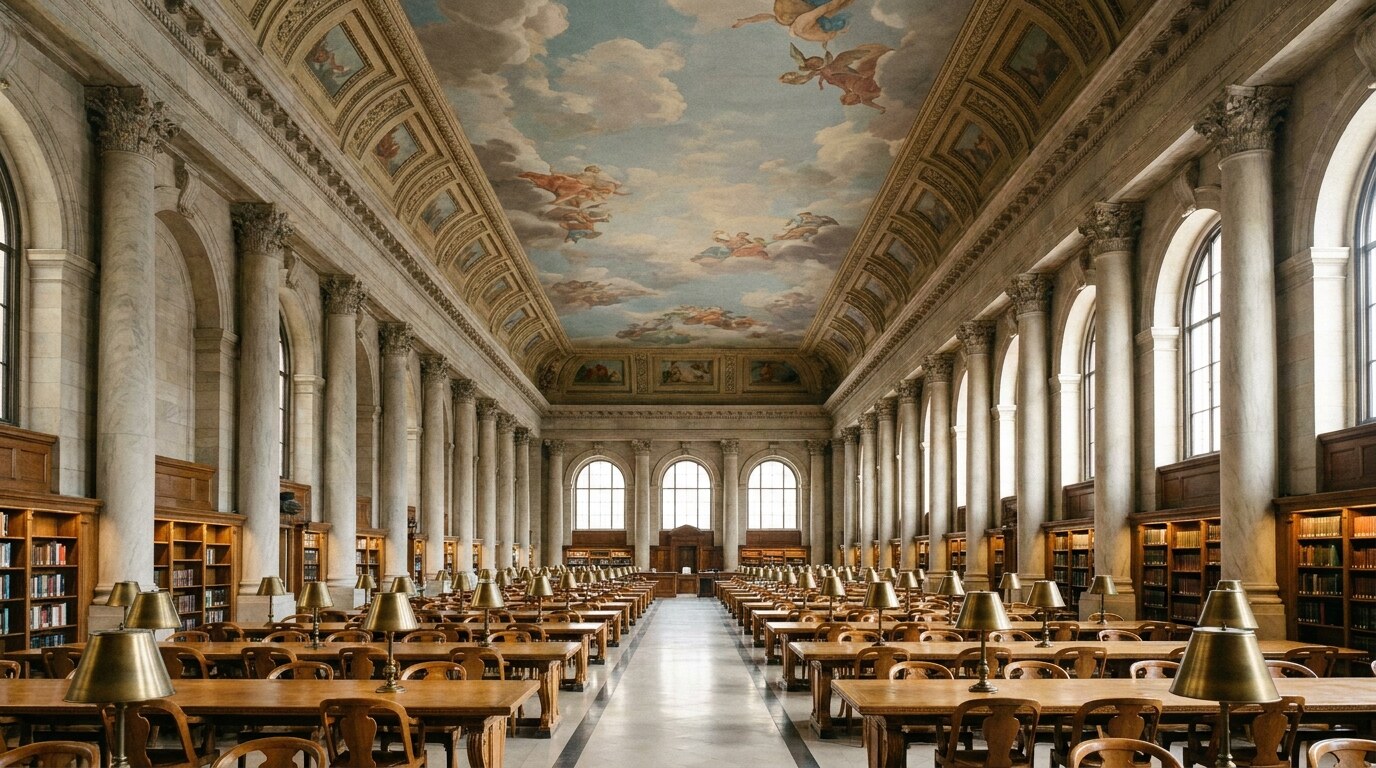
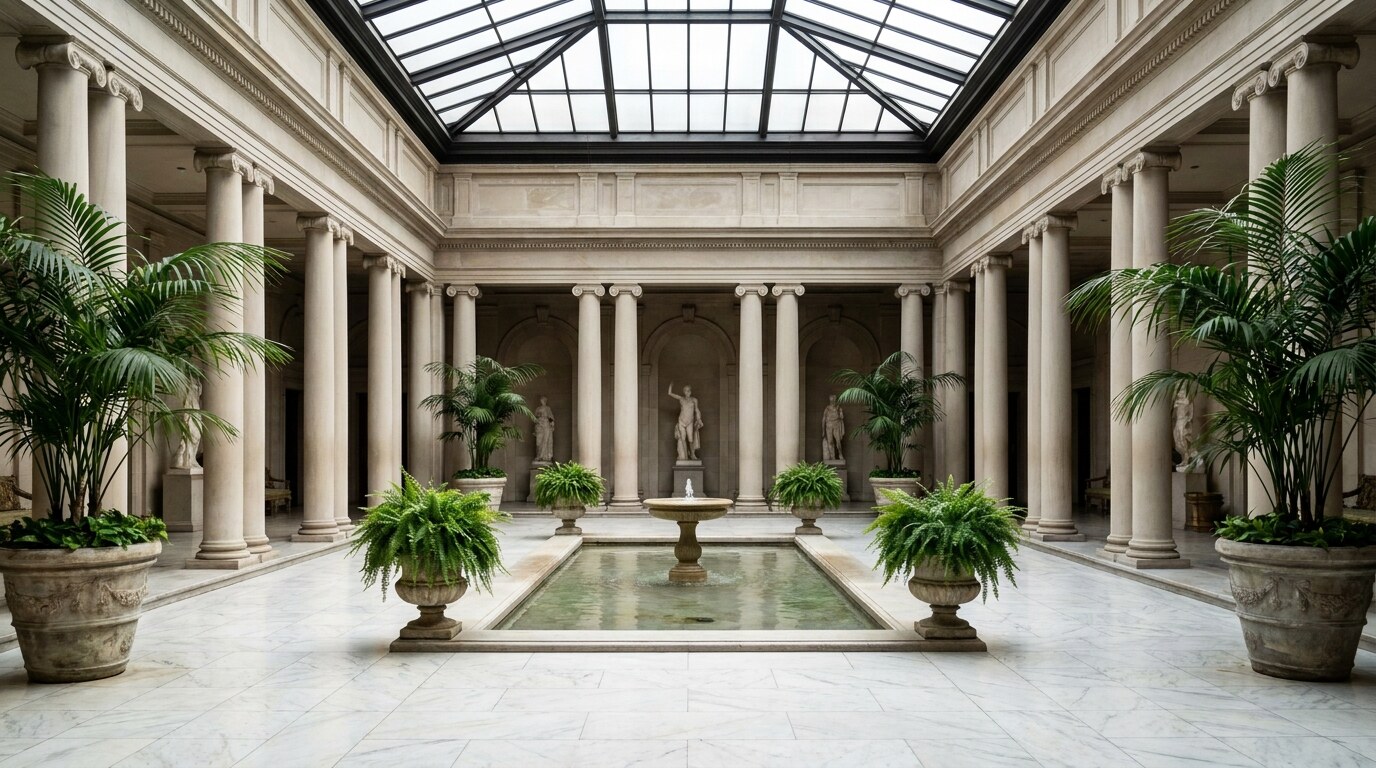
Five Beaux-Arts buildings define the American canon and remain accessible to visitors. The New York Public Library Stephen A. Schwarzman Building, designed by Carrère & Hastings, opened 23 May 1911 after 14 years of construction (1897–1911) at a final cost of $9 million. Grand Central Terminal (designed by Reed & Stem with Warren & Wetmore, opened 2 February 1913) presents the Main Concourse with its 38-metre-tall vaulted ceiling. The Henry Clay Frick House at One East 70th Street, New York (Carrère & Hastings, 1912–1914) became The Frick Collection. Boston Public Library (McKim, Mead & White, 1888–1895) presents the Bates Hall reading room. The 1893 World's Columbian Exposition in Chicago (organised by Daniel Burnham) was the foundational American Beaux-Arts moment, though only the Palace of Fine Arts survives (today the Museum of Science and Industry).
Interior planning principles
Five interior planning principles define Beaux-Arts work. (1) Axiality: every public room aligns on a primary axis from entrance to focal element. (2) Enfilade: aligned doorways open through successive rooms, creating sight lines through the full plan. (3) Hierarchy: room scale, ceiling height, and decorative richness map directly to the room's importance in the social programme. (4) Pavilion organisation: large buildings are organised as discrete pavilions linked by circulation rather than as monolithic blocks. (5) Façade-to-plan correspondence: the exterior elevation expresses the interior plan, with major rooms reading as identifiable bays in the elevation.
Why the style ended around 1925
The Beaux-Arts moment closed for three reasons during the 1920s. The Bauhaus opened in Weimar in 1919 and promoted a fundamentally different relationship between programme and form, emphasising functional rationality over compositional precedent. The 1925 Exposition Internationale des Arts Décoratifs et Industriels Modernes in Paris codified Art Deco as the new fashionable idiom. The Wall Street Crash of October 1929 ended the funding for large public and private Beaux-Arts commissions in the United States; few major Beaux-Arts buildings were begun after 1929, and almost none after 1933.
Surviving Beaux-Arts interiors open to the public
Five accessible Beaux-Arts interiors allow study at first hand. The Frick Collection (One East 70th Street, NYC) presents a complete Beaux-Arts town-house plan with original furnishings. The Morgan Library (33 East 36th Street, NYC, McKim, 1902–1906) presents the East Room library. The Boston Public Library Bates Hall (700 Boylston Street, Boston, McKim 1895) is open during library hours. The New York Public Library Astor Hall and Rose Reading Room (5th Avenue at 42nd Street, Carrère & Hastings, 1911) are open daily. Union Station, Washington DC (Daniel Burnham 1907, restored 1988) presents an accessible station-hall ensemble.
The forward research question for this journal is the documented atelier affiliation of American architects at the École between 1880 and 1914, of which approximately 70% are partially documented in the École's annual Annales volumes but specific concours entries and prize awards remain incompletely transcribed.
References and further reading
- École nationale supérieure des Beaux-Arts (archives).
- RIBA Library.
- The Frick Collection, New York.
- New York Public Library architecture page.
- American Institute of Architects.