
Antique Lighting Conversion: Safety, Wattage, Wiring Heritage Fixtures
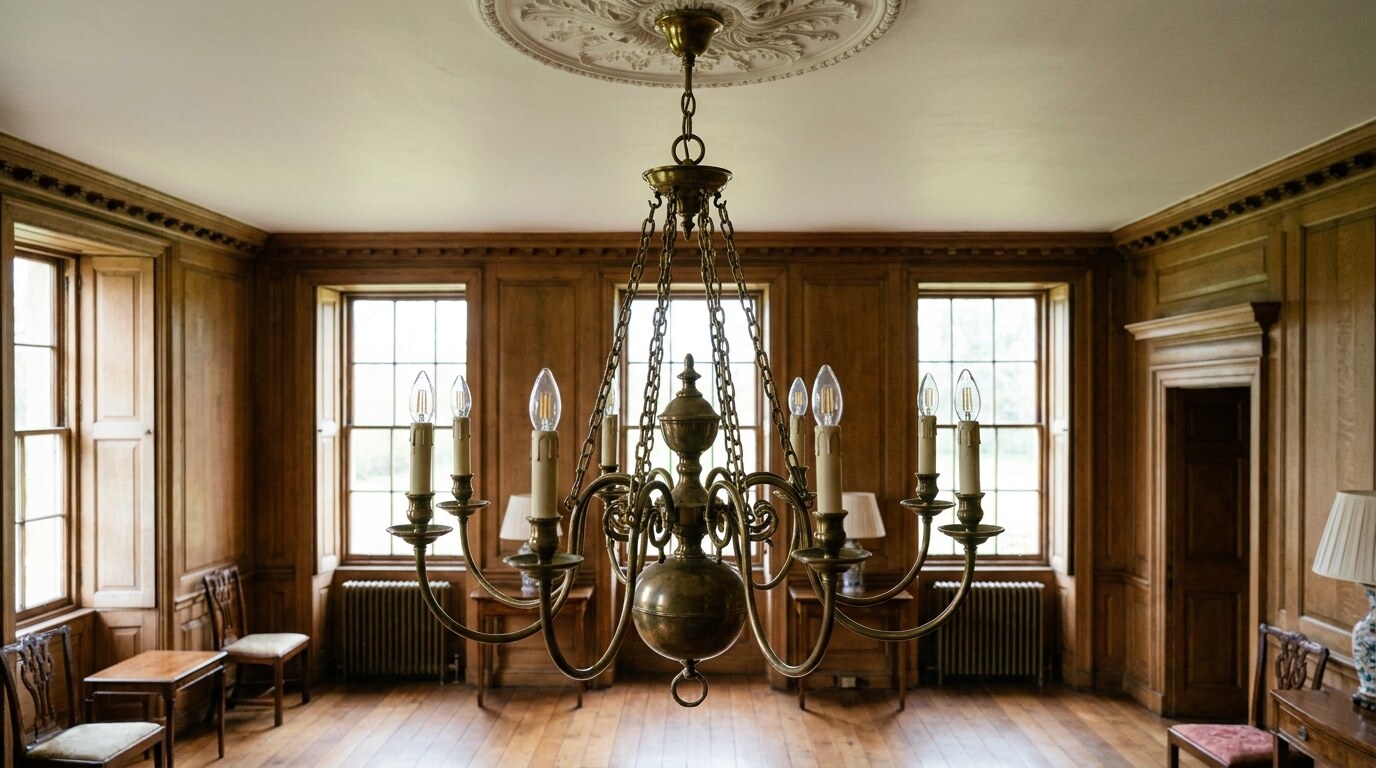
Converting an antique chandelier or wall sconce for safe modern use requires four discrete operations governed in the United Kingdom by BS 7671 (the IET Wiring Regulations, 18th Edition Amendment 2 effective 2022) and in the United States by Underwriters Laboratories UL 1598: complete rewire of internal conductors with appropriately rated heat-resistant flex; fitting of an approved plug-and-cable assembly; isolation transformer or current-limiting where the original fixture is gas-converted brass without earth continuity; and structural inspection of arms, chain, and ceiling rose for load-bearing safety against the fixture's full weight plus a 1.5 safety factor.
Why antique fixtures need conversion
Three reasons require conversion of every antique fixture before installation in a modern residence. The first is wiring deterioration: rubber-insulated cables (standard 1900–1965) embrittle and fail at flexure points; cotton-covered fabric cables (standard 1880–1925) lose insulation over time. The second is grounding: pre-1965 fixtures often lack continuous earth path through brass arms; modern earthing requires a green-yellow earth conductor connected to the metal body. The third is fittings compatibility: original Edison-screw and bayonet-cap holders may not match modern bulb voltages and may exceed modern fixture-temperature ratings.
The four-stage rewire process
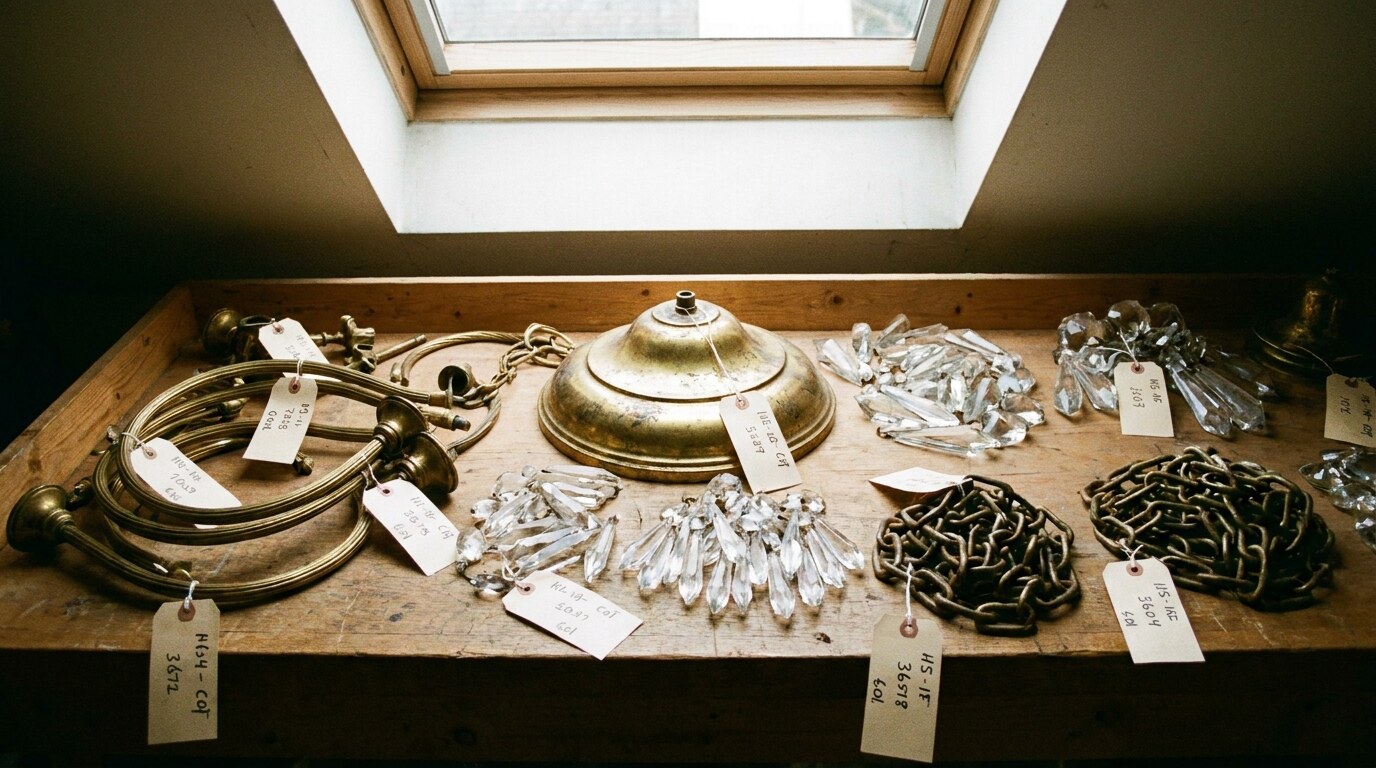
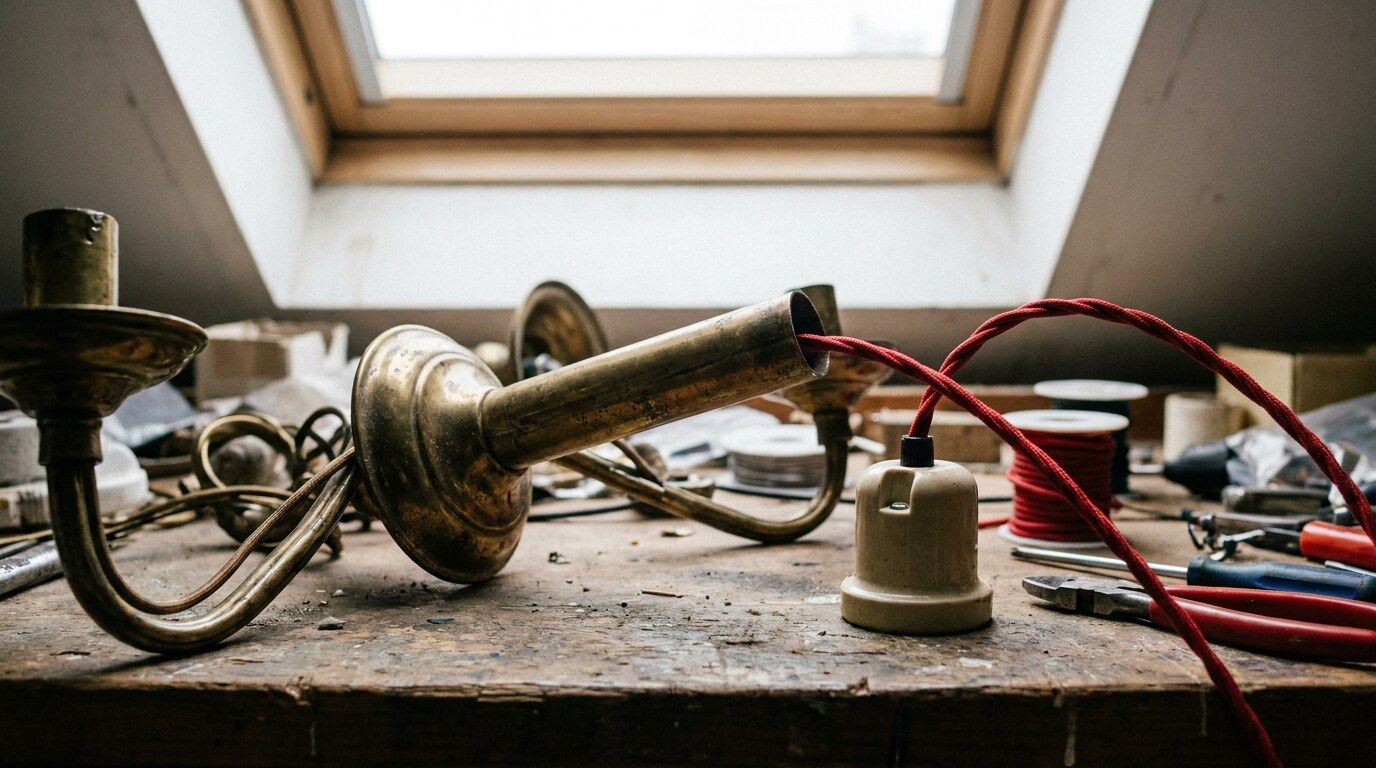
Stage 1: Disassembly. The fixture is taken apart at every joint without forcing, with original brass fittings catalogued for reassembly; original glass elements are individually packed. Stage 2: Cleaning. Brass arms are cleaned mechanically (no acid bath, which etches the historic patina); glass elements are washed in detergent and air-dried. Stage 3: Rewire. New heat-resistant flex (HBL or HOFR-rated, 105 °C operation) is threaded through hollow brass arms; new lampholders (Edison E14 or E27 ceramic-bodied) replace originals; an earth conductor is attached to the brass body where continuity does not survive. Stage 4: Reassembly and PAT test. The fixture is reassembled, suspended on a temporary rig, and tested under load before installation.
UK BS 7671 vs US UL 1598 compliance
BS 7671 18th Edition Amendment 2 (effective March 2022) requires that all new luminaire installations in domestic premises connect through an RCD-protected circuit with a maximum trip time of 0.4 seconds at 230 V; rewired antique fixtures count as new installations under the regulations and require RCD-protected supply. UL 1598 governs portable luminaires in the United States and requires temperature-rise testing at 105% of rated wattage continuous operation for 7.5 hours; antique-conversion specialists working in the US market may use UL-listed components and subject the conversion to electrical inspector approval but are typically not allowed to claim UL certification of the assembled antique fixture.
Bulb wattage calculation against arm-mount heat tolerance
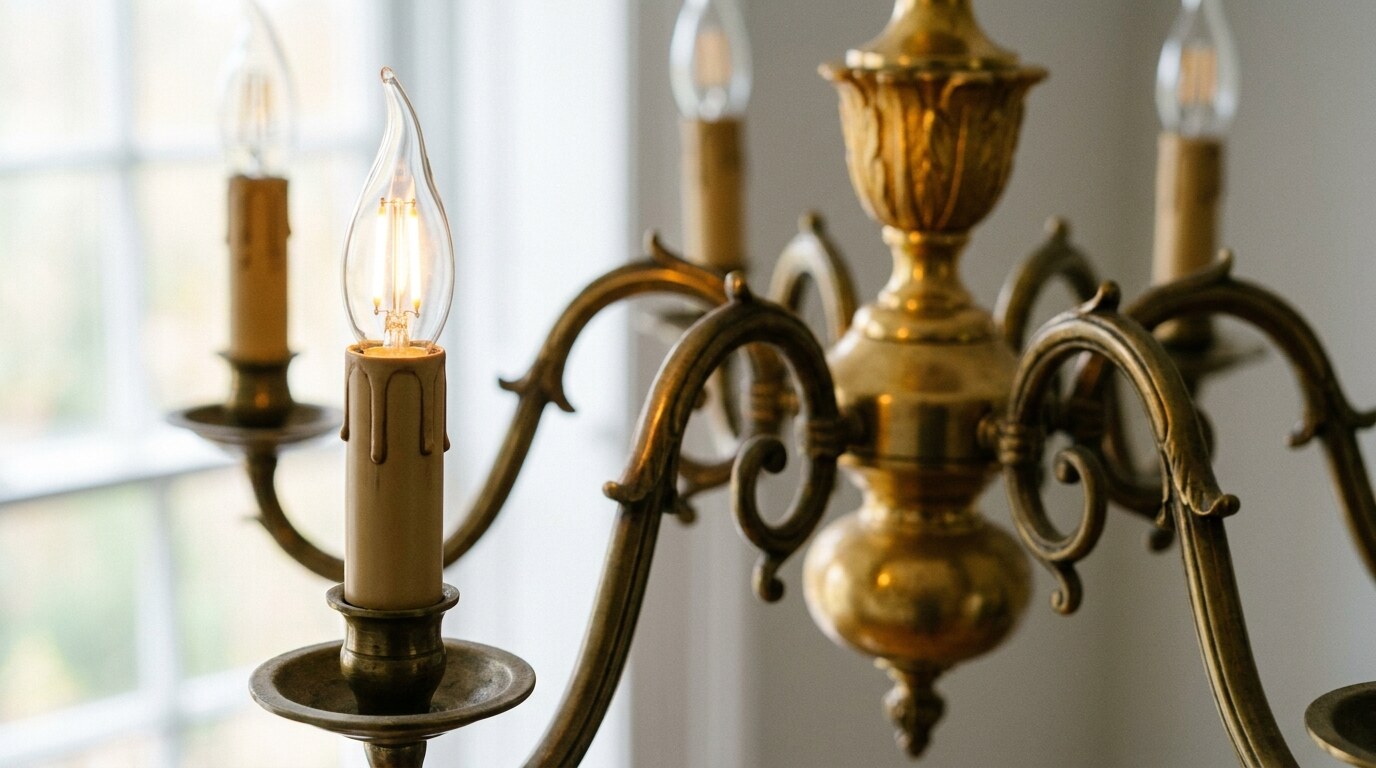
Three considerations determine maximum bulb wattage. Original lampholder rating (typically 60 W for B22 bayonet-cap holders, 75 W for E27 Edison-screw holders) sets one cap. Brass arm thermal capacity sets a second cap: a 12-arm chandelier running 12 × 60 W incandescent bulbs dissipates approximately 720 W of heat into the surrounding air, which the brass arms cannot tolerate above 25 to 30 W per arm without surface oxidation. LED retrofits below 4 W per arm produce equivalent visible illumination to historic candle-light at fraction of the heat load and are now standard for restored pieces.
Recognised UK and US workshops
Three London firms and two New York firms hold most heritage-fixture conversion work. Charles Edwards Conservation, London (Walham Grove, founded 1995), charges typical full-rewire-and-PAT-test rates of £400 to £1,200 per fixture as of 2026 depending on arm count and gas-conversion complexity. Cox Architectural Antiques (Surrey) and Wilkinson plc (London) carry similar restoration scope. In the United States, Ann-Morris Inc (founded 1925, New York) and Remains Lighting (founded 1996, New York) handle UL-conformant conversions at trade specifications.
Insurance and listed-building consent
Two regulatory considerations apply to listed-building fixture conversions in the UK. Listed Building Consent (LBC) is required for any modification of original fixtures or new electrical chases through plasterwork or boiserie; consent typically permits sympathetic conversion (modern wiring within historic body) but not replacement with reproduction. Building insurance (residential property cover) may require a Part P certificate from a qualified electrician for any new circuit work; antique-fixture installations should be commissioned and signed off by a Part P qualified electrician working alongside the lighting specialist.
The forward research question for this journal is the documented original wattage and lamp-type for major British and American period lighting installations 1880–1925, of which selective records survive but a comprehensive study has not been undertaken.
References and further reading
- IET (BS 7671 standards).
- Underwriters Laboratories (UL 1598).
- Charles Edwards, London.
- Historic England.